Commercial
Horizontal Directional Drilling
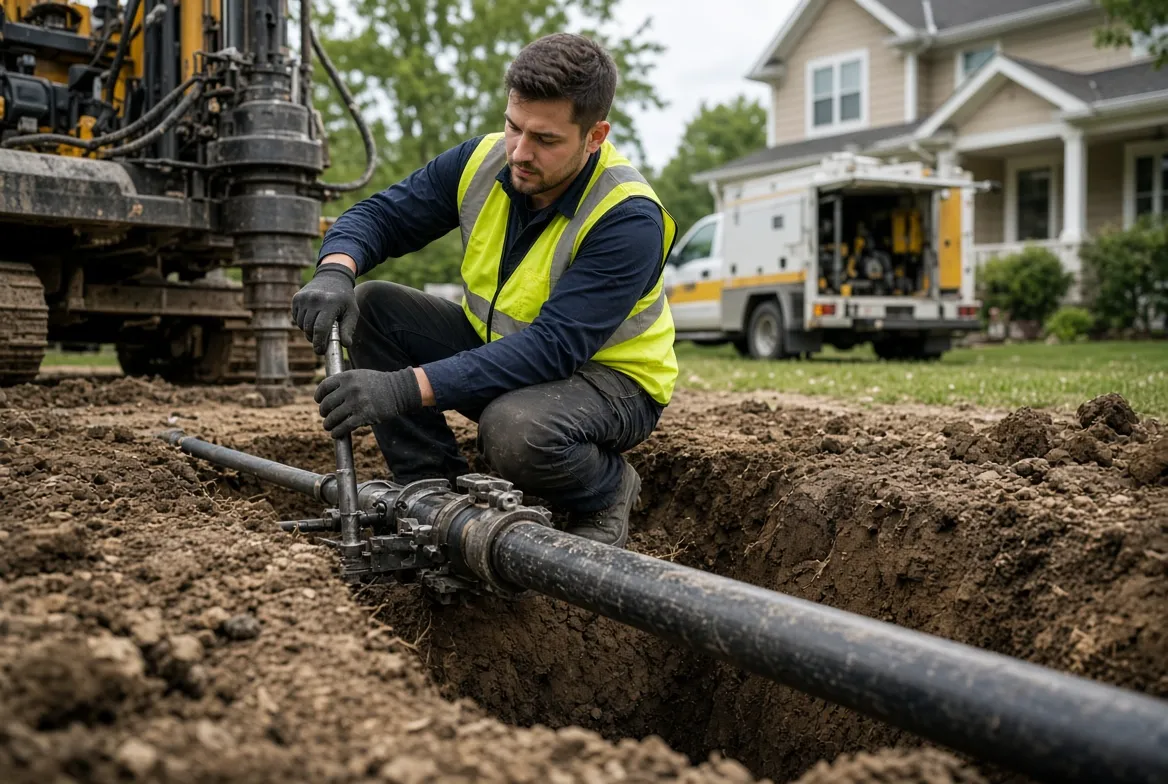
Steerable boring installs new pipe along a controlled path under driveways, roads, landscaping and waterways.
Replace a leaking or lead water service without trenching the driveway, walkway and front lawn.
The water service line running from the municipal main to your home is usually the homeowner's responsibility, and when it fails the conventional fix means trenching straight across whatever sits on top of it — lawn, walkway, driveway, mature landscaping.
The same trenchless techniques that replace sewer laterals work on potable water services. We pull a new line through the existing path, or bore a new one, using two small access points instead of an open trench.
Ohio's older housing means a meaningful number of homes are still served by lead or galvanised steel water service lines. Ohio EPA requires public water systems to maintain and publish lead service line inventories, and utilities statewide are working through replacement.
In most arrangements the utility handles its own portion and the property owner is responsible for the private side. Check with your water department before paying for anything — many Ohio systems offer replacement assistance, grants or financing for the private-side portion, and some will coordinate their work with yours to reduce total cost.
If your home predates the mid-1980s, the service line may be lead or galvanised steel. Lead is a recognised health hazard with no safe exposure level, and utilities across the country are working through replacement programmes — in many areas the utility replaces its portion and the homeowner is responsible for the private side.
Galvanised steel is not a lead hazard in itself, but it corrodes internally, restricting flow and releasing rust into your water. Both are replaced with modern HDPE or copper.
Check with your water utility before you pay. Many run replacement assistance, grants or low-interest financing for private-side lead service replacement. We will tell you if we think your line qualifies.
Water lines are pressurised — sewer lines are not. That difference matters: a sewer leak announces itself with backups and smell, while a water service leak can run undetected for months, inflating bills and quietly saturating the ground under your foundation.
Which one fits depends on the existing line and what is above it:
Ohio's freeze-thaw cycling is as hard on water services as it is on sewer laterals, and ageing galvanised line is most likely to fail in deep winter — the worst possible time to trench a frozen yard and driveway.
Trenchless replacement through two small access points is markedly less disruptive in those conditions, and we run it year round.
The process
Acoustic leak detection and pressure testing establish whether you have a leak, a corrosion problem, or a material you want gone.
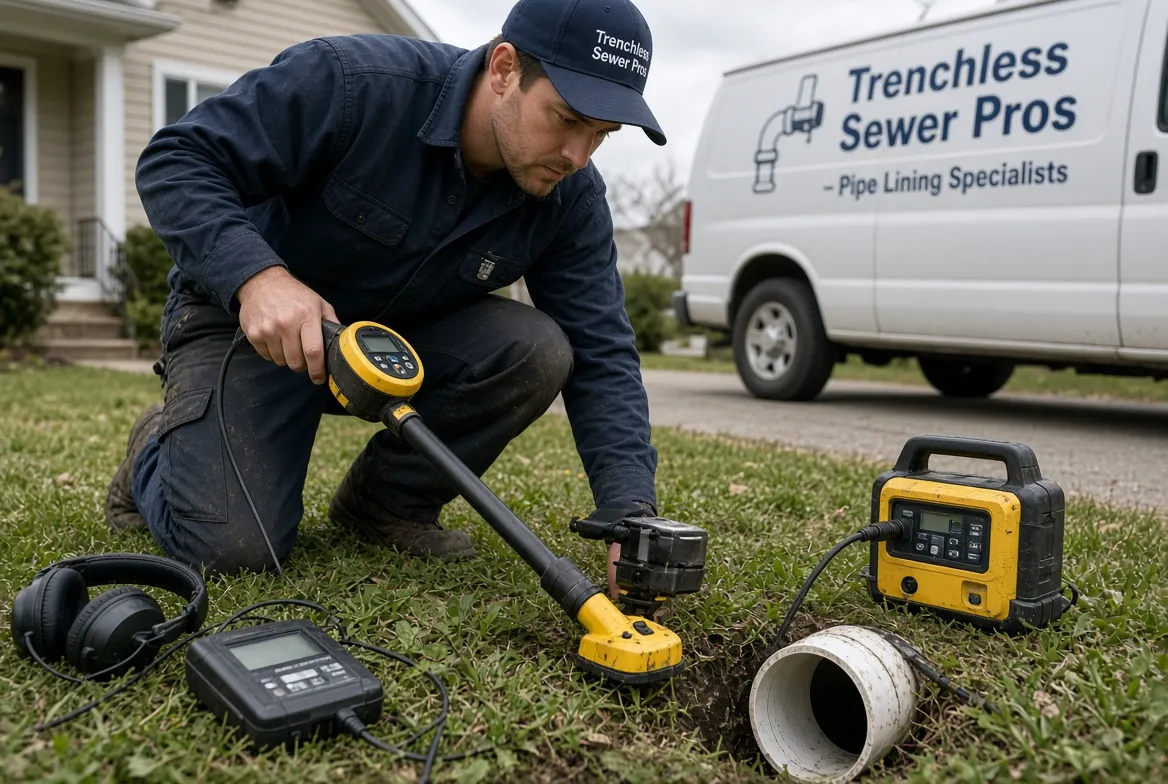
The water service route and every nearby utility are traced and marked. 811 is called for public utilities.
One at the meter or property line, one at the house entry.
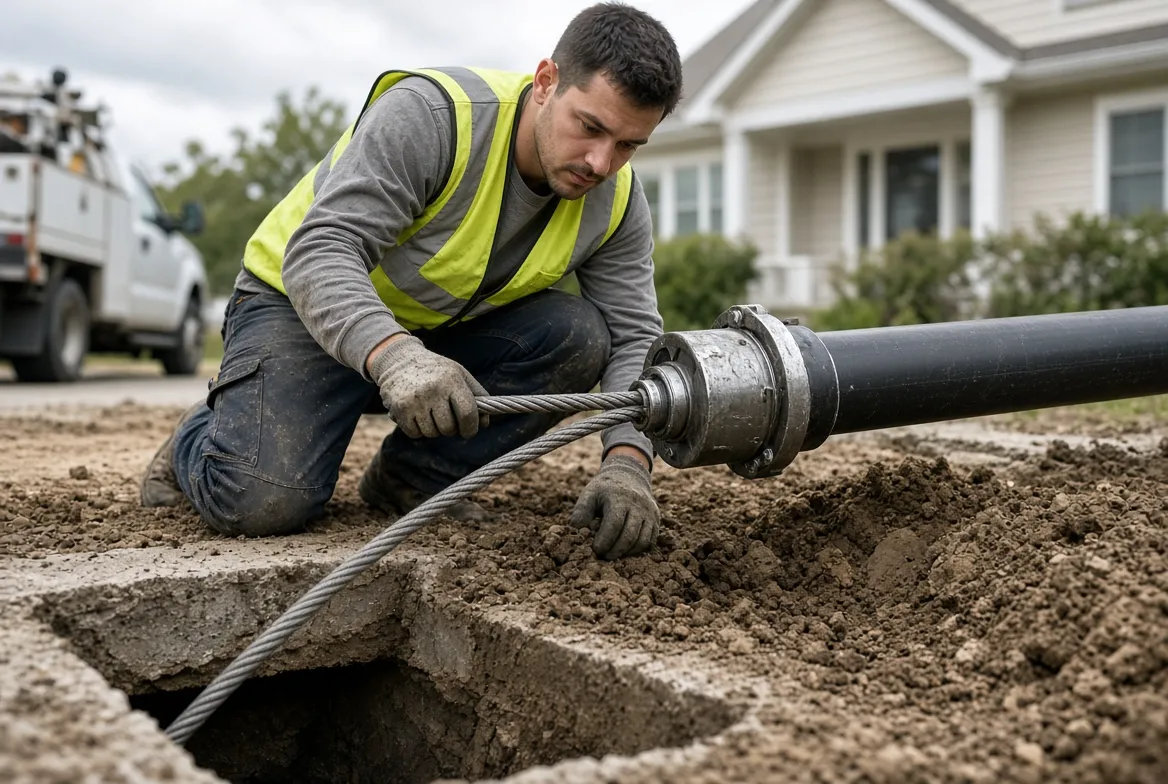
HDPE or copper is pulled or bored through. Fused HDPE arrives as one continuous length with no joints to leak.
The new service is tied in, pressure tested, and chlorinated and flushed to potable standards before you use it.
Two small openings are backfilled and restored. Everything between them was never touched.
Answers
Typically $3,000 to $12,000 for a residential service. Length, depth, pipe size, soil conditions and local permit requirements drive it. Conventional trenching can look cheaper on paper until you price restoring a driveway and mature landscaping.
Usually a few hours on the day of the tie-in. Most of the work — locating, fusing the new pipe, boring — happens with your existing service still running.
There is no safe level of lead exposure, so replacement is strongly advised. Check with your water utility first: many have replacement programmes, grants or financing for the private-side portion, and some will coordinate their work with yours.
In most jurisdictions the utility owns the main and often the portion to the curb stop or meter, and the property owner owns the line from there to the house. It varies by municipality, so confirm with your local water department before authorising work.
Usually HDPE, heat-fused into one continuous jointless length, or copper where local code requires it. Both are a substantial upgrade on galvanised steel, lead or old polybutylene.
Keep reading
Steerable boring installs new pipe along a controlled path under driveways, roads, landscaping and waterways.
Electronic locating maps the exact route and depth of your line, so excavation is surgical instead of speculative.
A bursting head splits the old pipe outward while pulling a new HDPE pipe into the same path — total replacement, two small pits.
Lines back up at the worst possible time. We answer 24/7, anywhere in the country, and every repair quote starts with a camera inspection so you see the pipe before you spend a dollar.