Recurring issue
Sewer Root Removal
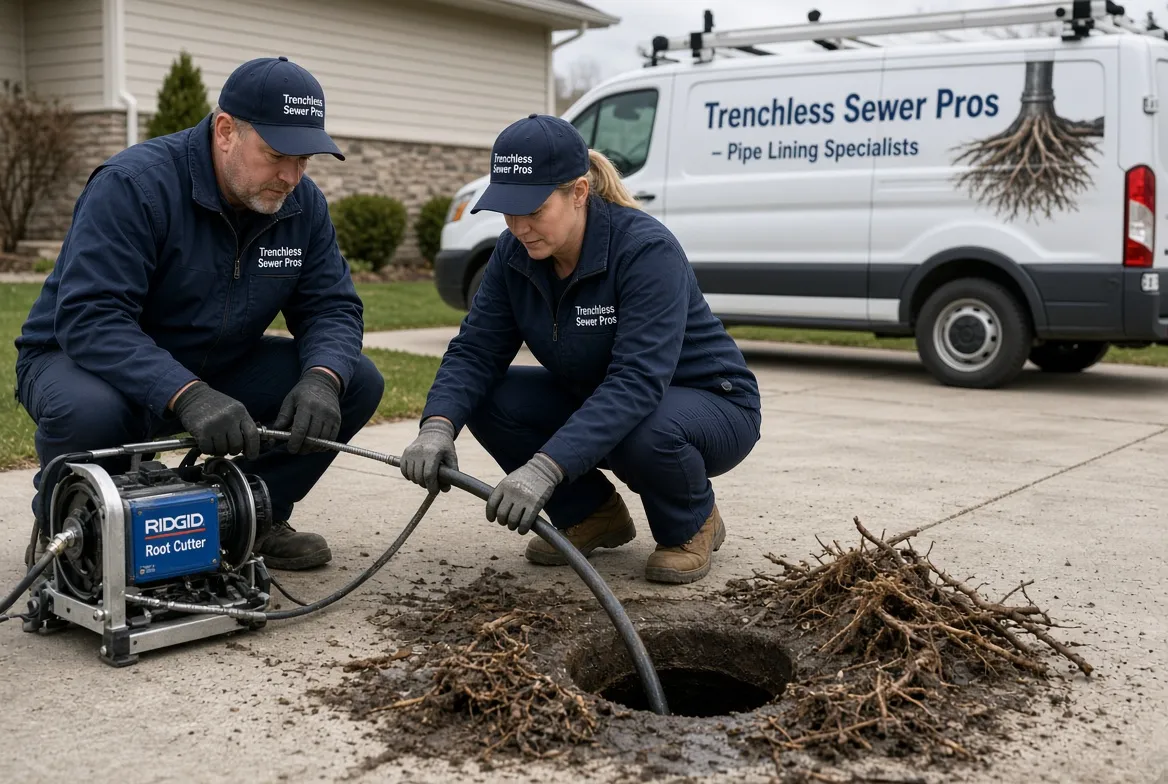
Cutting roots restores flow today. Sealing the joint they entered through is what stops them coming back.
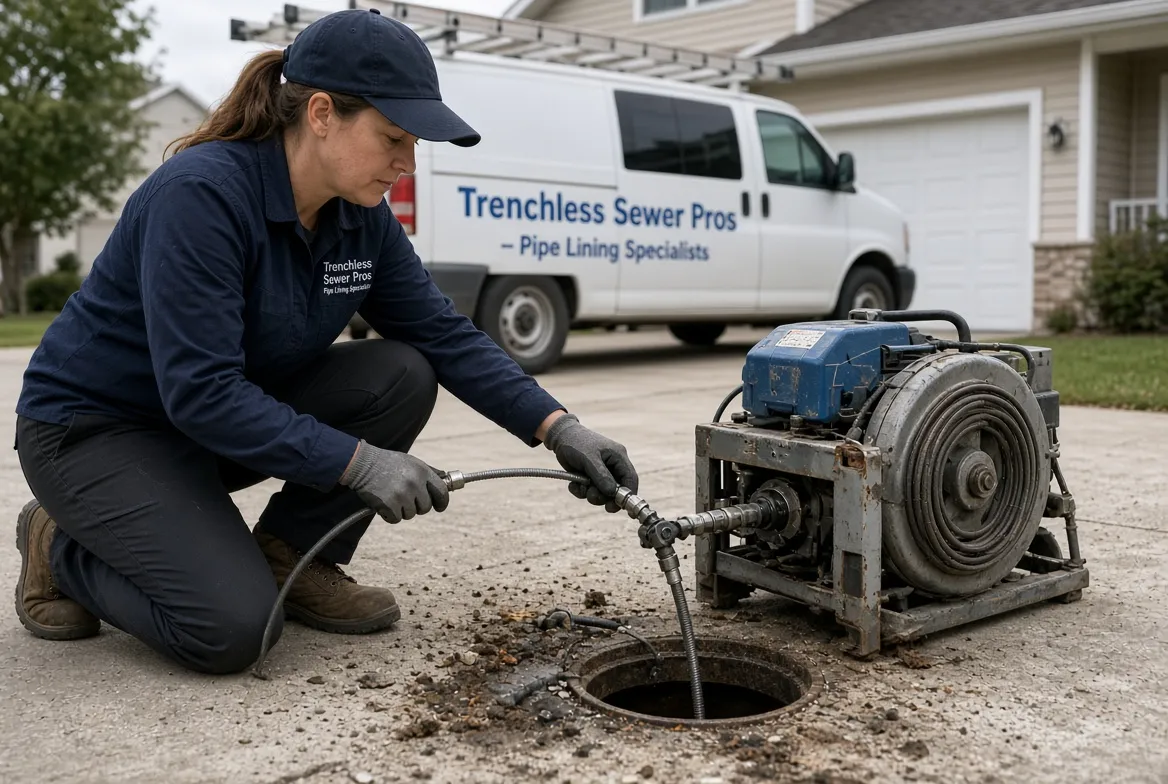
High-pressure water scours the pipe wall back to bare material — grease, sludge, scale and roots all go.
Hydro jetting uses water at high pressure through a specialised nozzle to scour the inside of a pipe back to its original wall. It is the difference between clearing a drain and actually cleaning it.
A cable machine bores a hole through a blockage and water starts flowing again, so the problem looks solved. The grease, sludge and root mass are still lining the pipe, and the drain backs up again within months. Jetting removes the material instead of punching through it.
Both have a place. The right choice depends on what is actually in the pipe.
| Cable / snake | Hydro jetting | |
|---|---|---|
| What it does | Bores a hole through the obstruction | Scours the full pipe wall |
| Grease and sludge | Leaves most of it behind | Removes it |
| Roots | Cuts what it catches | Cuts and flushes the debris out |
| Scale in cast iron | Little effect | Effective, often with a descaling head |
| Typical cost | $150 – $500 | $300 – $800 |
| How long it lasts | Weeks to months | Often years |
| Risk on fragile pipe | Lower | Can expose existing damage — camera first |
Residential sewer laterals are typically cleaned in the 1,500–4,000 psi range. Heavier commercial and municipal work runs higher, and large-diameter industrial lines can call for equipment rated far beyond anything appropriate for a house.
More pressure is not better. A technician who runs maximum pressure through brittle 1950s clay tile or badly corroded cast iron can turn a cleaning job into a replacement job. This is exactly why we camera the line first — pressure and nozzle selection depend on what the pipe is made of and what condition it is in.
Jetting cleans pipe. It does not repair pipe. If the camera shows cracked joints, a collapsed section, a belly holding standing water, or roots that have displaced the pipe itself, cleaning buys you time and nothing more.
In that situation jetting is still worth doing — it is the required preparation step before CIPP lining, because a liner will not bond to a wall coated in grease and scale. But it is the first half of the job, not the whole job.
The process
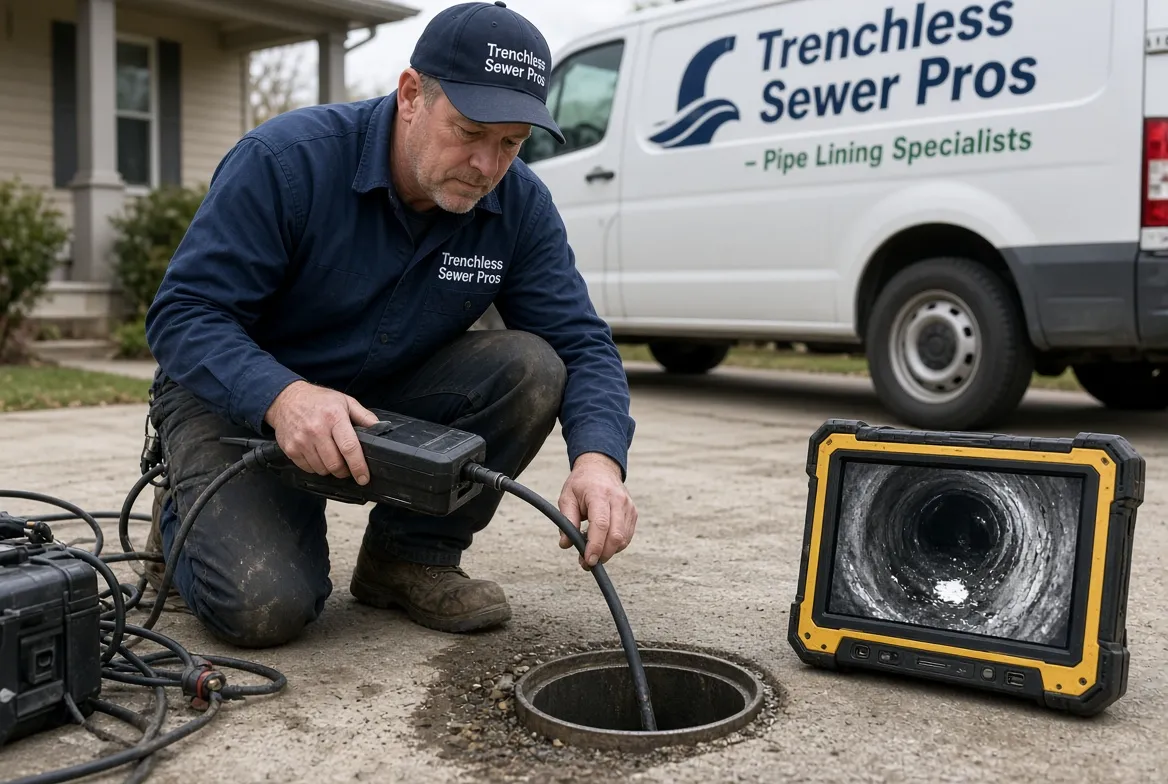
We inspect before jetting. Pipe material and condition determine safe pressure, and we are not going to find out the hard way.
Nozzle choice is specific: penetrating heads for solid blockages, rotating heads for grease, chain cutters for roots and heavy scale.
The hose is fed to the far end and drawn back, so debris is carried away from the house rather than packed tighter.
A second pass confirms the pipe is genuinely clean and documents any defects that the buildup was hiding.
You get the before-and-after footage and an honest answer on whether cleaning is enough or the pipe needs repair.
Answers
Typically $300 to $800 for a residential line. Commercial work, long runs, and jobs needing multiple access points cost more. If the line is completely blocked and has to be opened before jetting can start, that adds to it.
In sound pipe, yes. In pipe that is already cracked, badly corroded or deteriorated, high pressure can worsen existing damage. This is the reason we camera first and match pressure to the material — anyone who quotes jetting over the phone without seeing the pipe is guessing with your plumbing.
For a typical home, only when there is a reason. Restaurants and commercial kitchens often need it on a 3–6 month schedule because of grease. Homes with heavy root pressure might go annually. If you need jetting every few months, cleaning is not your answer — the pipe needs lining or replacement.
It cuts and flushes them out, yes. But roots enter through a defect — a cracked joint or a failed seal — and that defect is still there afterwards. They grow back. See root removal for how we handle the underlying cause.
No. Jetting works entirely through existing cleanouts or access points. Nothing is dug up.
Keep reading
Cutting roots restores flow today. Sealing the joint they entered through is what stops them coming back.
Mechanical cutting heads strip corrosion and tuberculation out of cast iron, restoring the pipe's real diameter.
A self-levelling camera runs the full line and shows you exactly what is wrong before anyone quotes a repair.
Lines back up at the worst possible time. We answer 24/7, anywhere in the country, and every repair quote starts with a camera inspection so you see the pipe before you spend a dollar.