Flagship
CIPP Pipe Lining
A resin-saturated liner is installed inside the old pipe and cured hard, forming a new jointless pipe within a pipe.
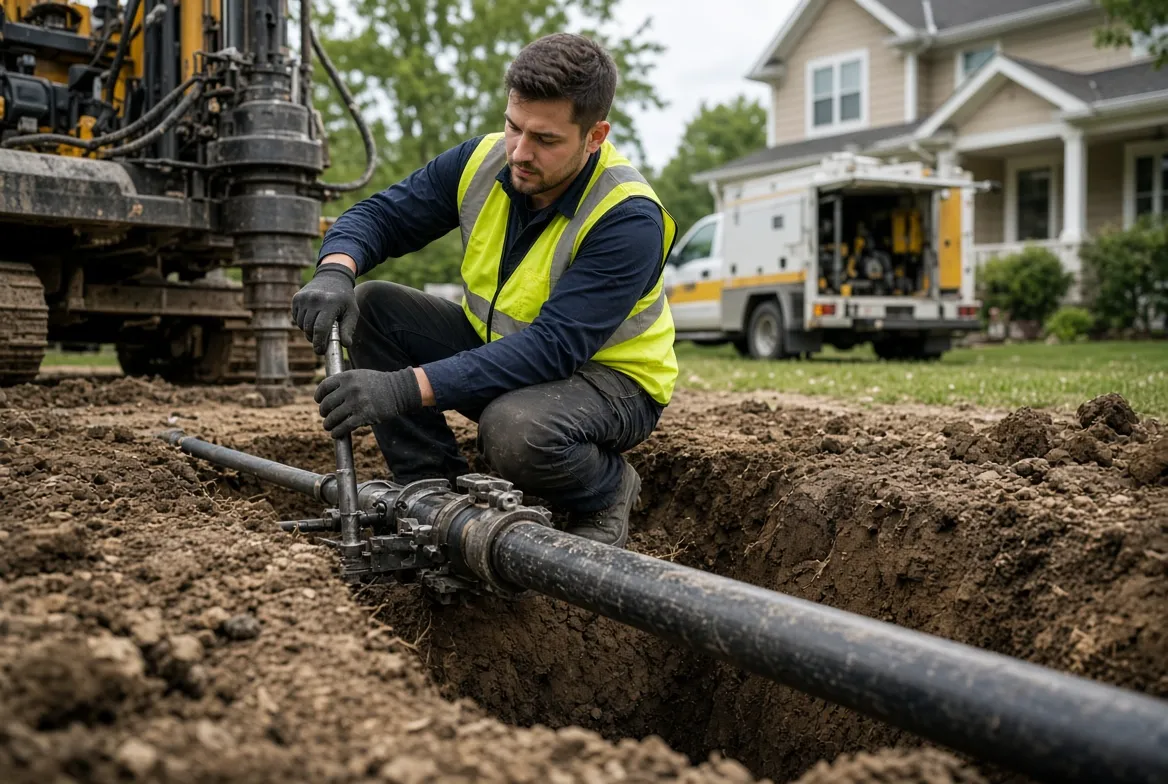
A bursting head splits the old pipe outward while pulling a new HDPE pipe into the same path — total replacement, two small pits.
Pipe bursting replaces a sewer line completely without trenching it. A conical bursting head is pulled through the existing pipe, fracturing it outward into the surrounding soil while simultaneously drawing a new pipe into the void it leaves behind.
This is the method for pipe that is too far gone to line. Collapsed sections, missing pipe, severe deformation, deteriorated Orangeburg — bursting does not need a sound host pipe, because it destroys the host pipe on its way through.
CIPP lining rebuilds inside your existing pipe and needs that pipe to be structurally intact. Pipe bursting destroys the existing pipe and pulls in a brand new one, so the old pipe's condition is irrelevant.
If the camera shows cracks, root intrusion and failing joints in a pipe that still holds its shape — line it. If it shows collapse, missing sections, severe out-of-round deformation or disintegrated Orangeburg — burst it. Bursting also lets you increase diameter, which lining cannot do, so it is the option when the original line was undersized.
Bursting is more invasive than lining but far less invasive than digging. A conventional replacement trenches the entire run. Bursting needs an entry pit and a receiving pit — typically two openings a few feet across — and leaves everything between them undisturbed.
Pipe bursting almost always pulls in high-density polyethylene (HDPE), fused into one continuous length before installation. The fused joints are as strong as the pipe wall itself, which means the finished line has no joints to fail.
That matters because joints are the failure point in virtually every old sewer. Clay tile fails at mortared joints. Cast iron corrodes at connections. A fused HDPE line has none of these, is chemically inert, and flexes rather than cracking under soil movement and freeze-thaw cycling.
It is a powerful method, not a universal one. Bursting is ruled out or complicated by:
The process
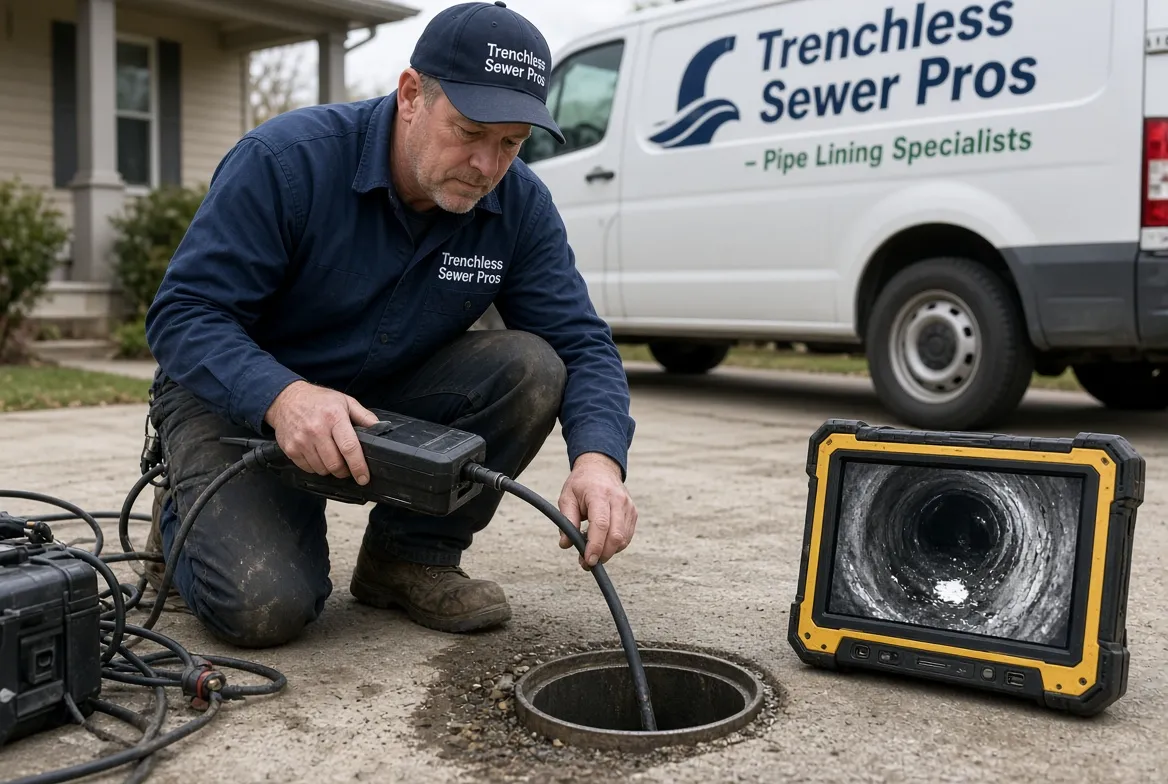
Camera survey plus electronic locating of the sewer and every nearby utility. On bursting jobs this step is a safety requirement, not a formality.
A small entry pit and a receiving pit, usually at the house connection and near the municipal main.
HDPE sections are heat-fused above ground into one continuous length with no joints.
A hydraulic winch draws the bursting head through the old line. It fractures the host pipe outward and tows the new pipe in behind it.
New line is tied into the building drain and the municipal connection, then flow-tested.
Final footage documents the new pipe end to end, and the two pits are backfilled and restored.
Answers
Typically $5,000 to $25,000 for a residential lateral. Length, depth, soil conditions, utility congestion and the amount of surface restoration at the two pits drive the number. It generally costs more than lining and far less than full open-trench replacement once restoration is included.
Most residential jobs run one to two days. Pit excavation and pipe fusion take the bulk of it; the pull itself is often finished within an hour.
Yes — this is a genuine advantage over lining. Bursting routinely goes up a size, for example 4-inch to 6-inch. If your original line was undersized for the building, this is the method that fixes it.
It can, if the work is done without proper locating. Bursting displaces soil outward, so anything running close alongside is at risk. We locate every utility on the route before starting. Cross bores — where a gas line was previously drilled straight through the sewer — are a specific and serious hazard, and camera inspection is how they are found.
High-density polyethylene (HDPE) in almost all cases, heat-fused into a single continuous length. It is jointless, corrosion-proof, and flexes rather than cracking with ground movement.
No. You get two small pits, typically at each end of the run. The ground between them is untouched, which is what separates this from conventional replacement.
Keep reading
A resin-saturated liner is installed inside the old pipe and cured hard, forming a new jointless pipe within a pipe.
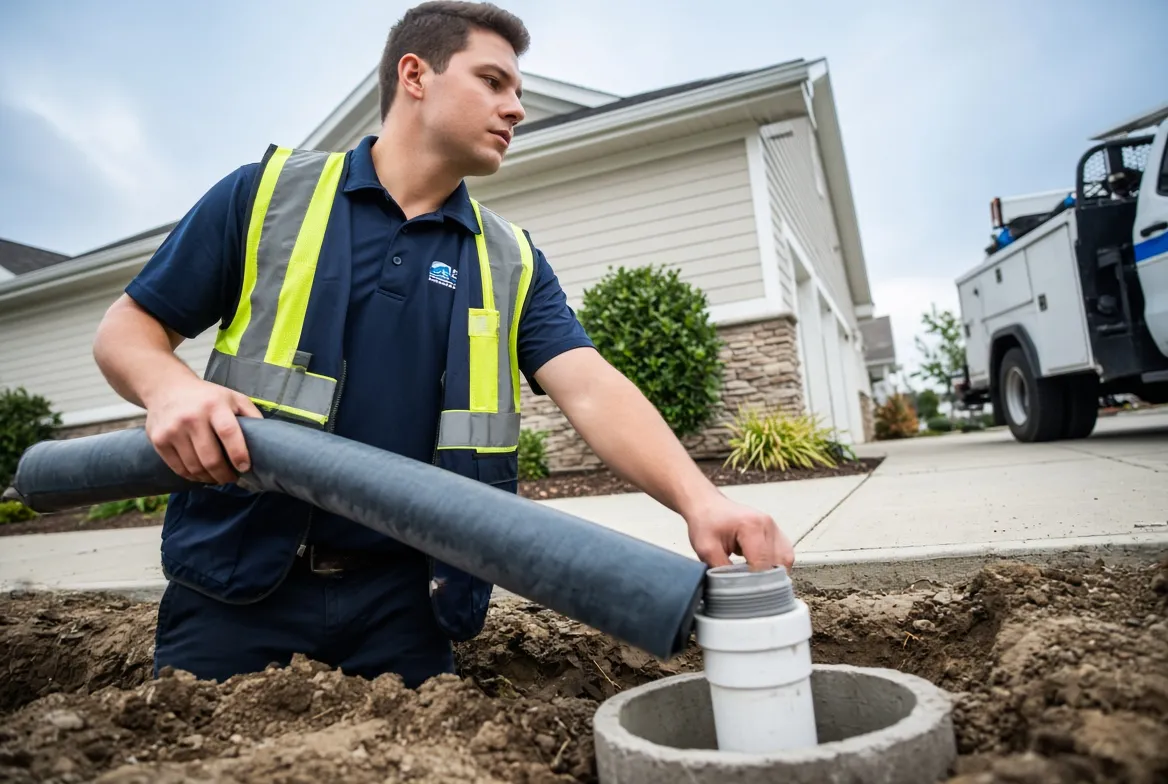
Steerable boring installs new pipe along a controlled path under driveways, roads, landscaping and waterways.
A self-levelling camera runs the full line and shows you exactly what is wrong before anyone quotes a repair.
Lines back up at the worst possible time. We answer 24/7, anywhere in the country, and every repair quote starts with a camera inspection so you see the pipe before you spend a dollar.