Start here
Sewer Camera Inspection
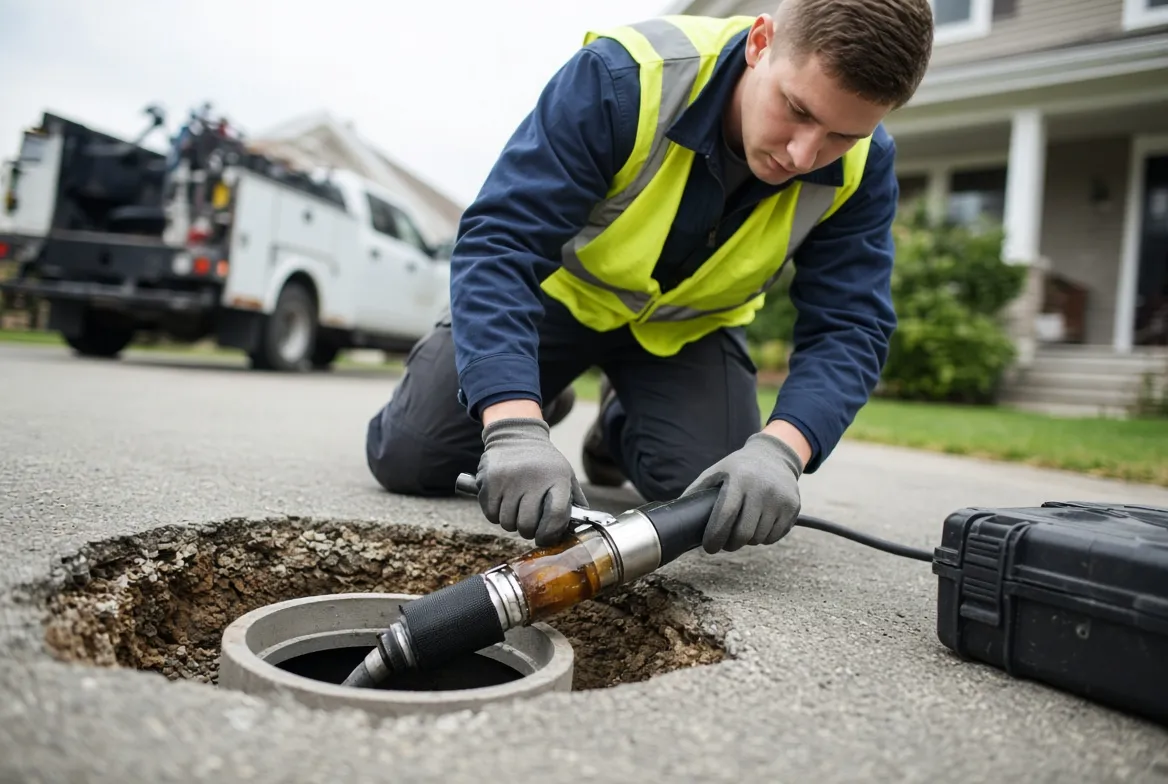
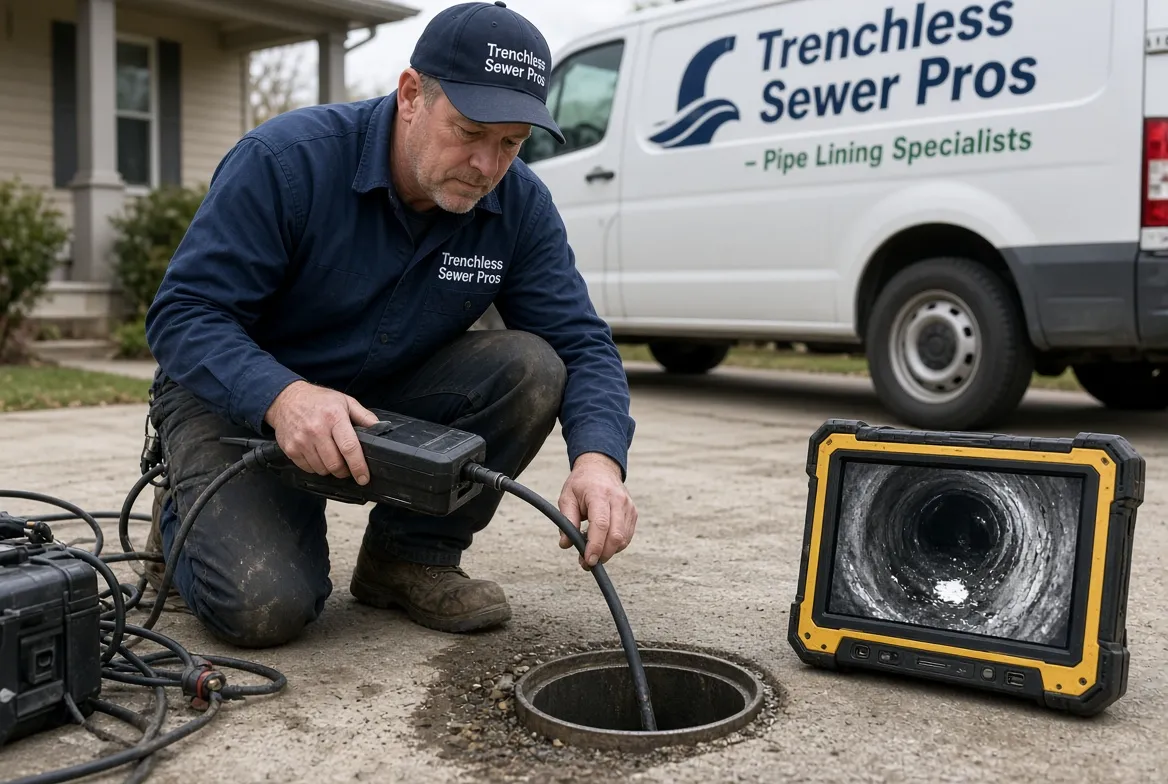
A self-levelling camera runs the full line and shows you exactly what is wrong before anyone quotes a repair.
Ohio's housing stock is old enough that sewer laterals are failing in volume — clay tile at the joints, Orangeburg collapsing out of round, cast iron scaling shut. We repair them without trenching your yard, statewide, 24 hours a day.
Statewide
Ohio has one of the oldest residential housing stocks in the country, and the sewer laterals under it are reaching the end of their service life at scale. Cleveland's median home was built in 1941. Its inner suburbs are older still — Lakewood, Cleveland Heights and East Cleveland all sit at 1938. Toledo and Youngstown average 1955, Cincinnati 1960, Akron 1962.
Those dates matter because they tell you what is buried in the yard. Homes from that era were connected with vitrified clay tile or, in the post-war building boom, Orangeburg — and both have well-understood failure modes that are now arriving on schedule.
We work across all 88 Ohio counties, repairing and replacing these lines without excavating along their length.
Why Ohio lines fail
Vitrified clay was the residential standard from the 1880s into the 1980s. It was laid in short sections with mortared joints, and those joints are the weak point — they open with ground movement and give roots a way in. Clay itself is almost chemically indestructible; the connections are what fail.
Bituminous fibre pipe was used heavily in Ohio's post-war construction. It does not crack like clay — it deforms out of round, delaminates and eventually collapses. Thoroughly deteriorated Orangeburg usually cannot be lined, which makes it one of the clearest cases for pipe bursting.
Ohio runs through dozens of freeze-thaw cycles a year. Soil expands and contracts around buried pipe, working joints loose over decades. It is a slow, cumulative load that southern states simply do not apply to their sewer lines.
Established Ohio neighbourhoods have large street trees with root systems that have had sixty or eighty years to find the warm, nutrient-rich water escaping an open clay joint. Root intrusion is the single most common cause of sewer failure in the state.
What's under your yard
A camera inspection confirms it in under an hour, but the year your home was built is a reliable first indication.
| Built | Likely material | How it fails |
|---|---|---|
| Before 1950 | Vitrified clay tile, cast iron | Joint failure, root intrusion, cast iron scaling |
| 1945 – 1972 | Orangeburg (bituminous fibre), clay tile | Deformation and collapse; Orangeburg often cannot be lined |
| 1950 – 1975 | Cast iron | Internal tuberculation narrowing the bore, then perforation |
| 1970s onward | PVC / ABS | Generally sound; failures are usually bellies, crushing or poor installation |
Services
Every service below is available statewide, 24 hours a day. Each page covers how the method works in Ohio conditions specifically.
A self-levelling camera runs the full line and shows you exactly what is wrong before anyone quotes a repair.
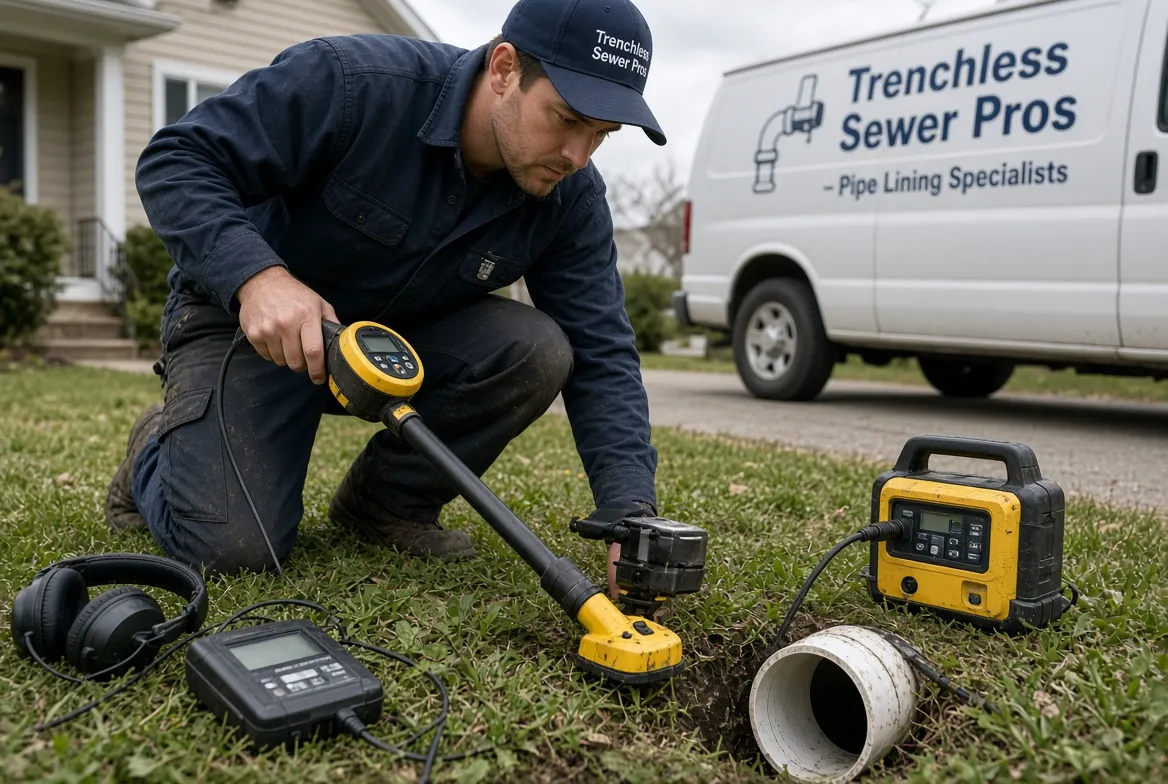
Electronic locating maps the exact route and depth of your line, so excavation is surgical instead of speculative.
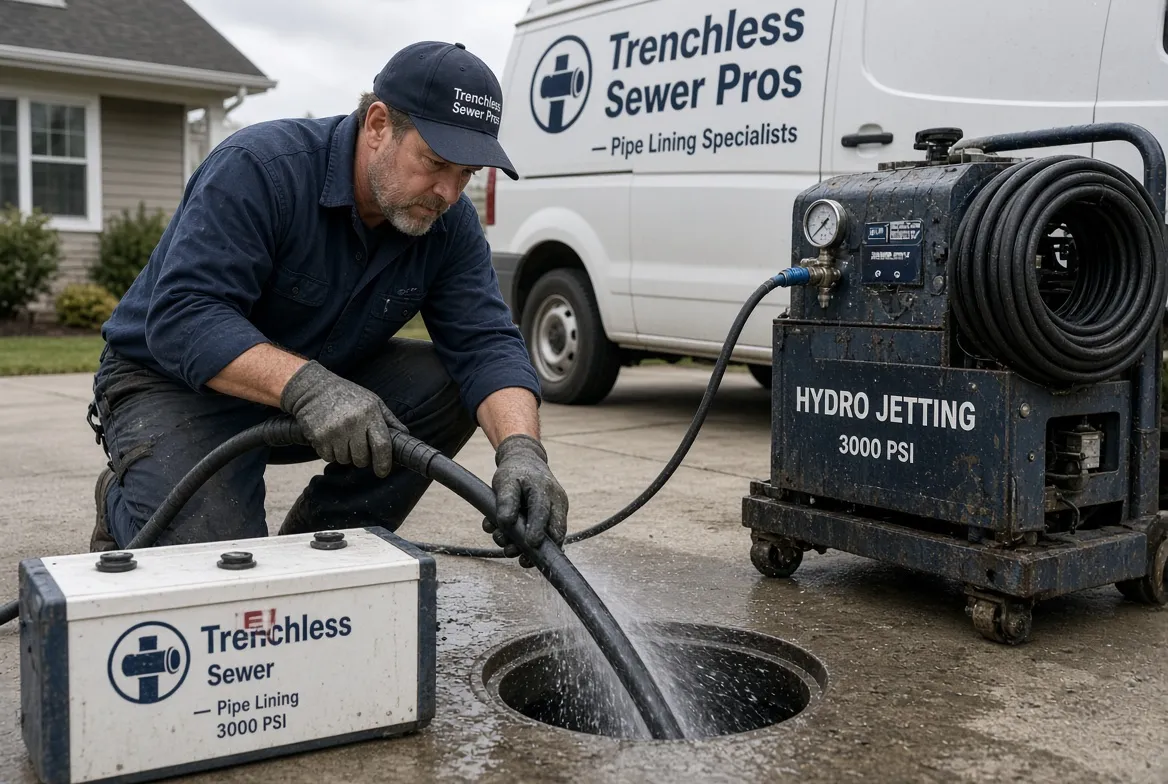
High-pressure water scours the pipe wall back to bare material — grease, sludge, scale and roots all go.
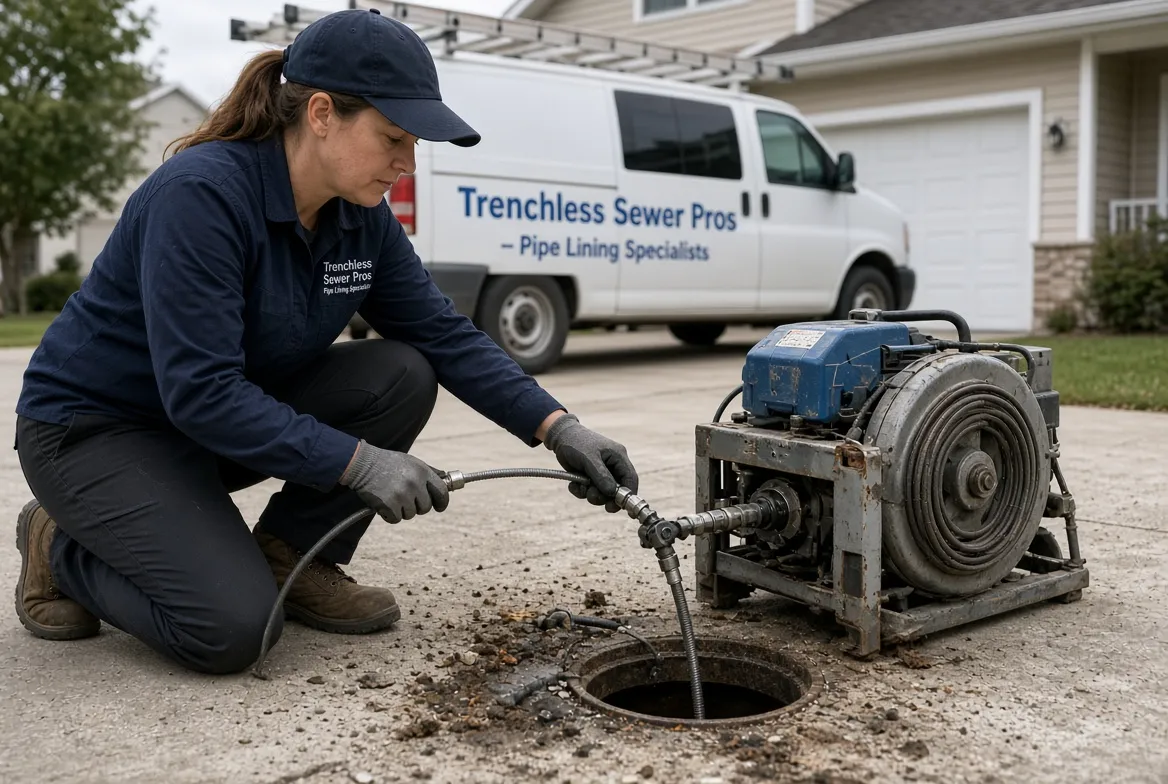
Mechanical cutting heads strip corrosion and tuberculation out of cast iron, restoring the pipe's real diameter.
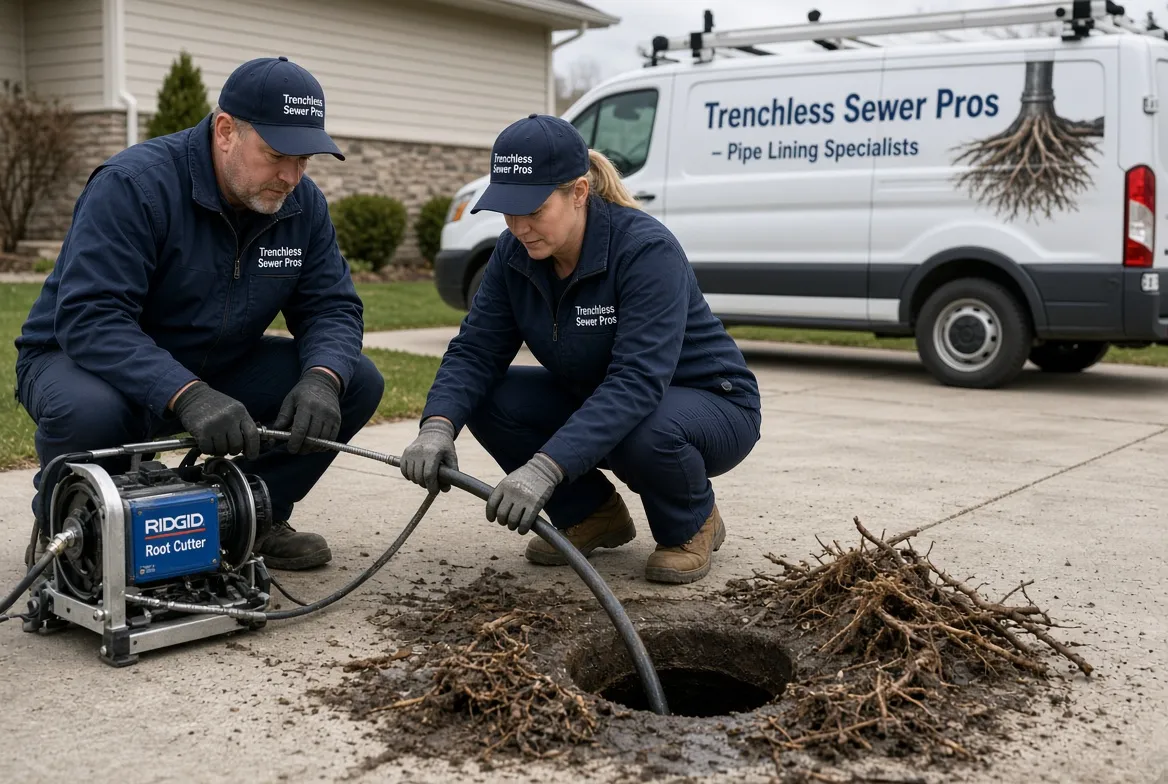
Cutting roots restores flow today. Sealing the joint they entered through is what stops them coming back.
A resin-saturated liner is installed inside the old pipe and cured hard, forming a new jointless pipe within a pipe.
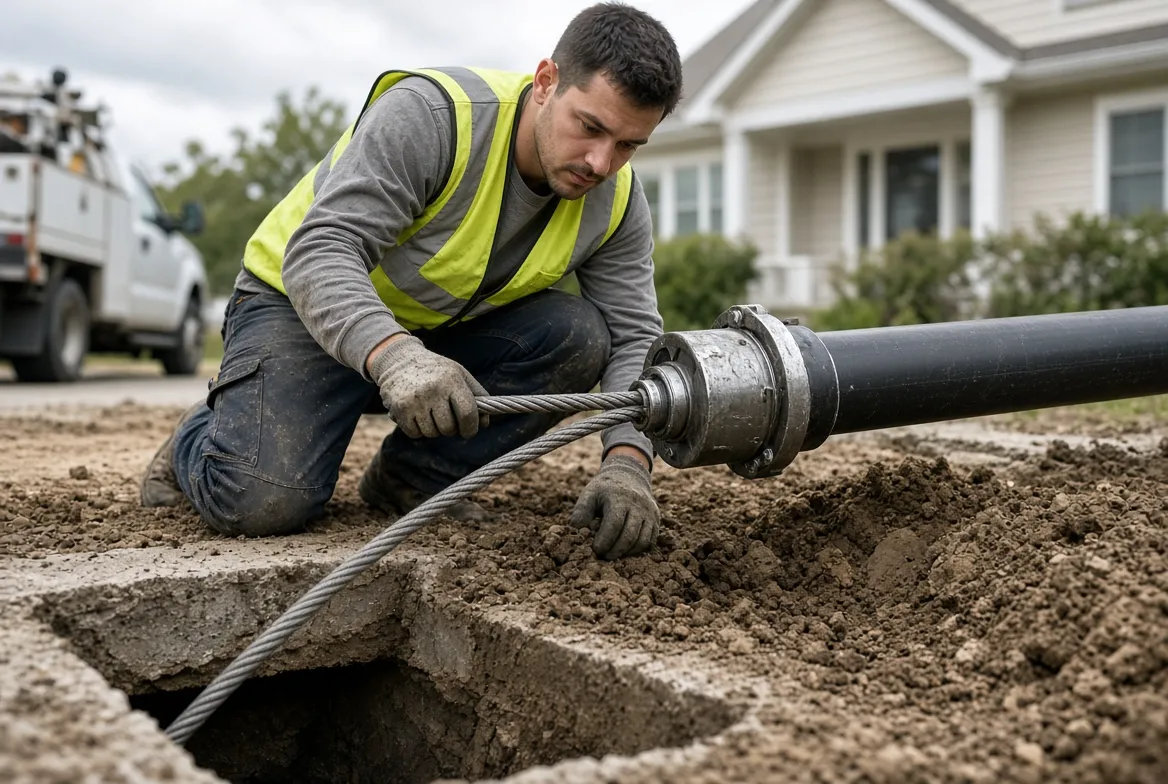
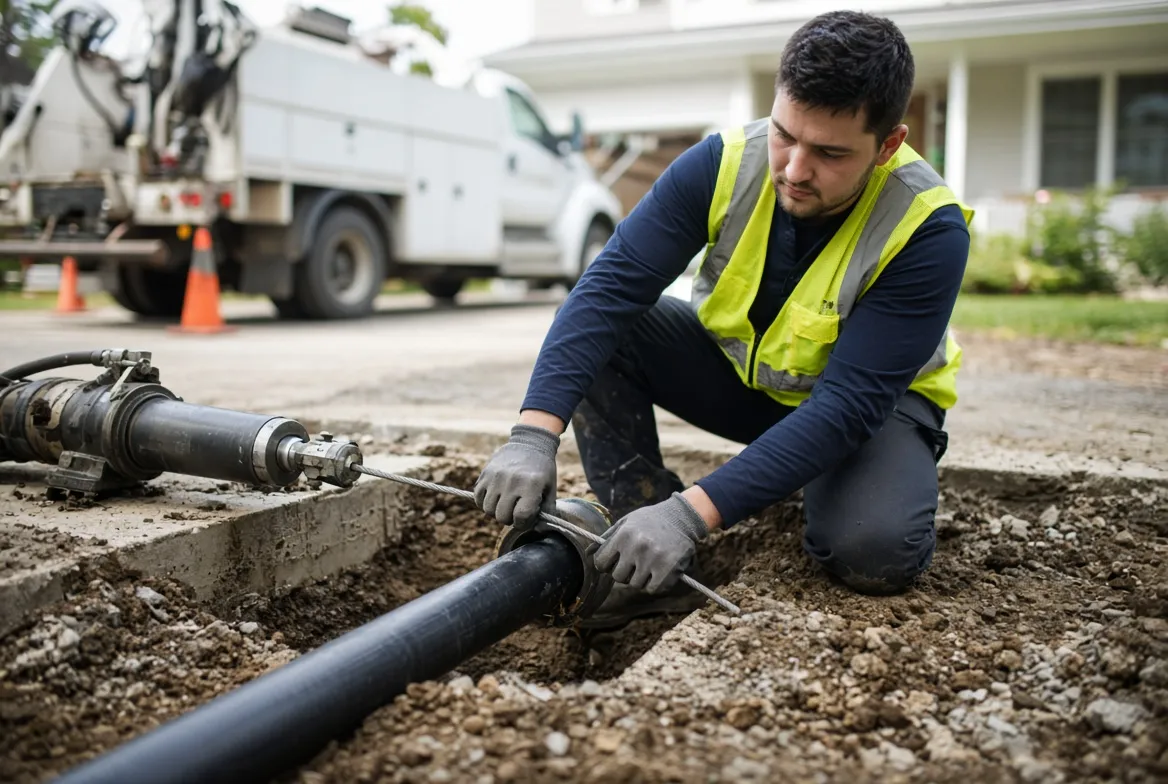
A bursting head splits the old pipe outward while pulling a new HDPE pipe into the same path — total replacement, two small pits.
One bad joint doesn't justify a whole new line. A sectional liner repairs just the damaged length.
Replace a leaking or lead water service without trenching the driveway, walkway and front lawn.
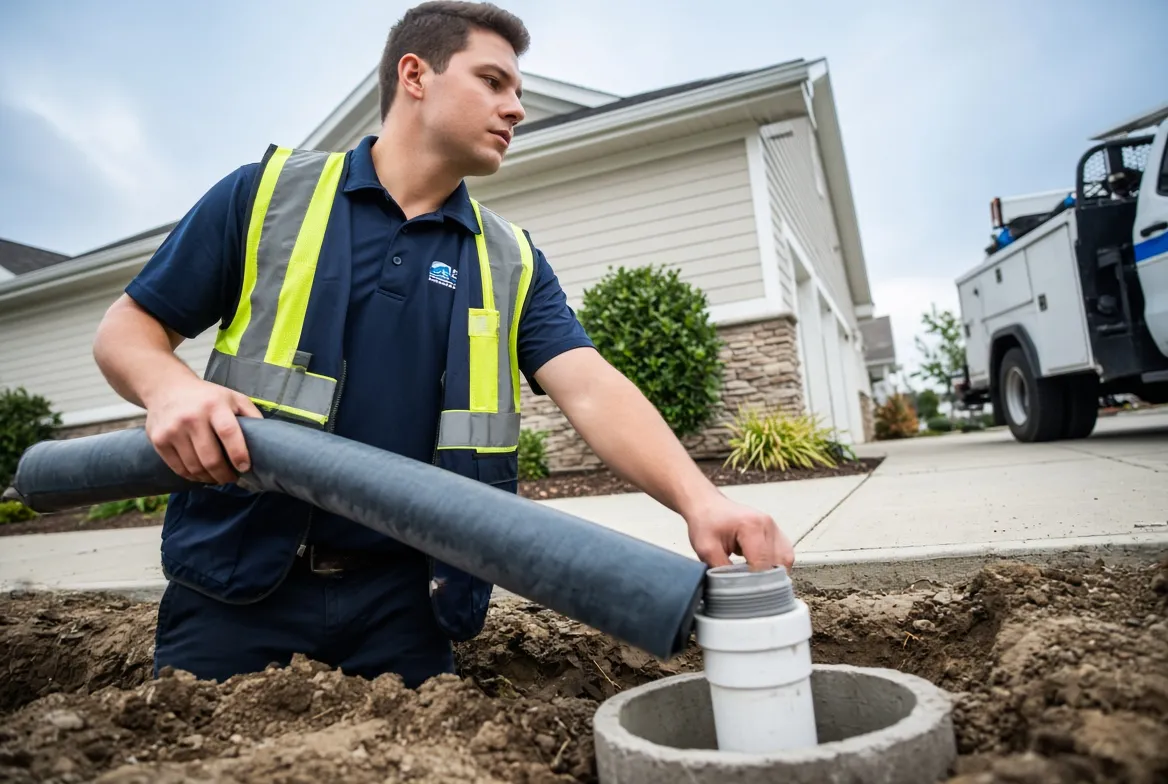
Steerable boring installs new pipe along a controlled path under driveways, roads, landscaping and waterways.
Who pays
Ohio property owners generally maintain the sewer lateral running from the building to the municipal main, though the precise division of responsibility is set locally and varies between sanitary districts. Some municipalities take ownership at the property line; others hold the owner responsible all the way to the main, including the portion beneath the street.
Confirm yours before authorising work. Your city sewer department or county sanitary engineer will tell you where their responsibility ends and yours begins. It is a short phone call that occasionally saves a five-figure bill.
Permits are also local. The City of Columbus, for example, requires a permit for sewer lateral repair and replacement regardless of the method used — trenchless included. We handle permitting as part of the job and work to the requirements of whichever authority has jurisdiction over your address.
A standard Ohio homeowners policy typically does not cover sewer line repair or sewage backup damage. Coverage is often available as a separate endorsement, and even then claims are sometimes denied where the insurer determines the damage was gradual or the system was not maintained. Check your policy before you assume you are covered.
Statewide coverage
The oldest housing in the state and the heaviest genuine demand. Cleveland proper averages 1941 construction; Lakewood, Cleveland Heights and East Cleveland date to 1938. Expect clay tile, heavy cast iron in the urban core, and mature tree canopy driving root intrusion across Cuyahoga, Lake, Lorain, Medina and Geauga counties.
Newer on average than the rest of the state, but the pre-1970 inner ring is a different story. Mid-century neighbourhoods including Franklinton, Linden and the South Side carry the heaviest concentration of Orangeburg lateral in central Ohio. Bexley (1944), Grandview Heights and Upper Arlington (1959) are firmly in the clay-tile era.
1960 median construction with substantial older stock, plus the steep hillside terrain that makes open-cut excavation expensive and difficult. Cast iron is common in the urban basin; Norwood averages 1938.
Toledo and Youngstown share the oldest median construction in the state at 1955. Akron sits at 1962, Canton 1961, Dayton 1971. These are clay-tile and cast-iron markets with long-established neighbourhoods and the tree canopy to match.
Coverage
We cover all 923 incorporated cities and villages in Ohio, across all 88 counties. Below are the largest by population, followed by the full list by county.
Answers
In most Ohio municipalities the property owner maintains the lateral from the building to the connection with the public main, but the dividing line is set locally and genuinely varies. Some cities take responsibility at the property line; others hold the owner responsible to the main, including under the street. Confirm with your city sewer department or county sanitary engineer before authorising work.
Usually yes. Permit requirements are set by the municipality, and many Ohio cities require a permit for lateral repair or replacement regardless of the method used — Columbus is explicit that trenchless work is included. We handle permitting as part of the job.
Lining a residential lateral typically runs $4,000 to $20,000 and pipe bursting $5,000 to $25,000, consistent with national ranges. Ohio's cost of living pulls toward the lower half of those bands in most markets. A camera inspection is $100 to $750 and a single spot repair $1,500 to $5,000.
Sometimes, but frequently not. Orangeburg fails by deforming out of round and delaminating rather than cracking, and a liner needs a host pipe that still holds its shape. Where Orangeburg has lost its form — common in Ohio's post-war housing — pipe bursting is the appropriate method. A camera inspection is the only way to know which case you are in.
Not directly — buried laterals sit below the frost line in most of Ohio. The damage is cumulative and indirect: repeated freeze-thaw cycling moves the soil around the pipe, and decades of that movement works clay tile joints apart. It is one reason Ohio laterals fail at joints more readily than equivalent-age pipe in southern states.
Ohio's housing is basement-heavy, which means the lowest fixture in the house is below the level of the sewer main — so when the lateral restricts, the basement floor drain is where it surfaces first. Recurring backups almost always indicate roots, a failing joint, or scale in cast iron, and a camera inspection will identify which within the hour.
Lines back up at the worst possible time. We answer 24/7, anywhere in the country, and every repair quote starts with a camera inspection so you see the pipe before you spend a dollar.