Full replacement
Pipe Bursting
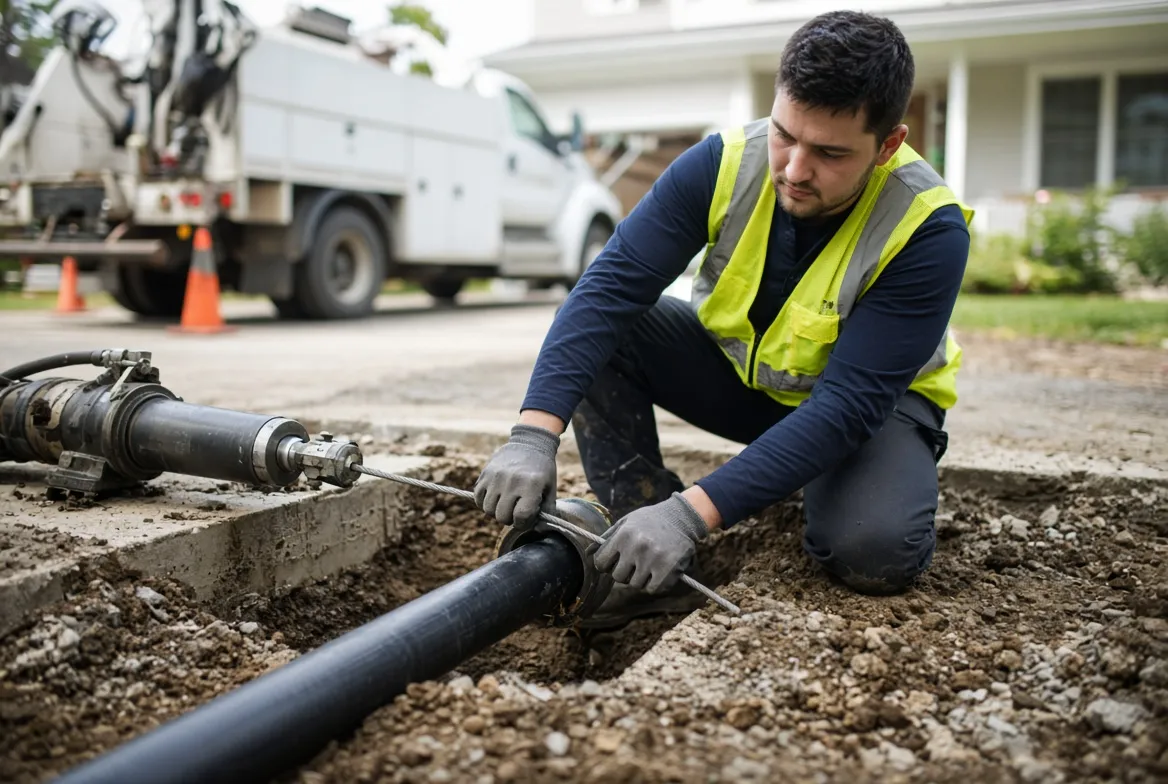
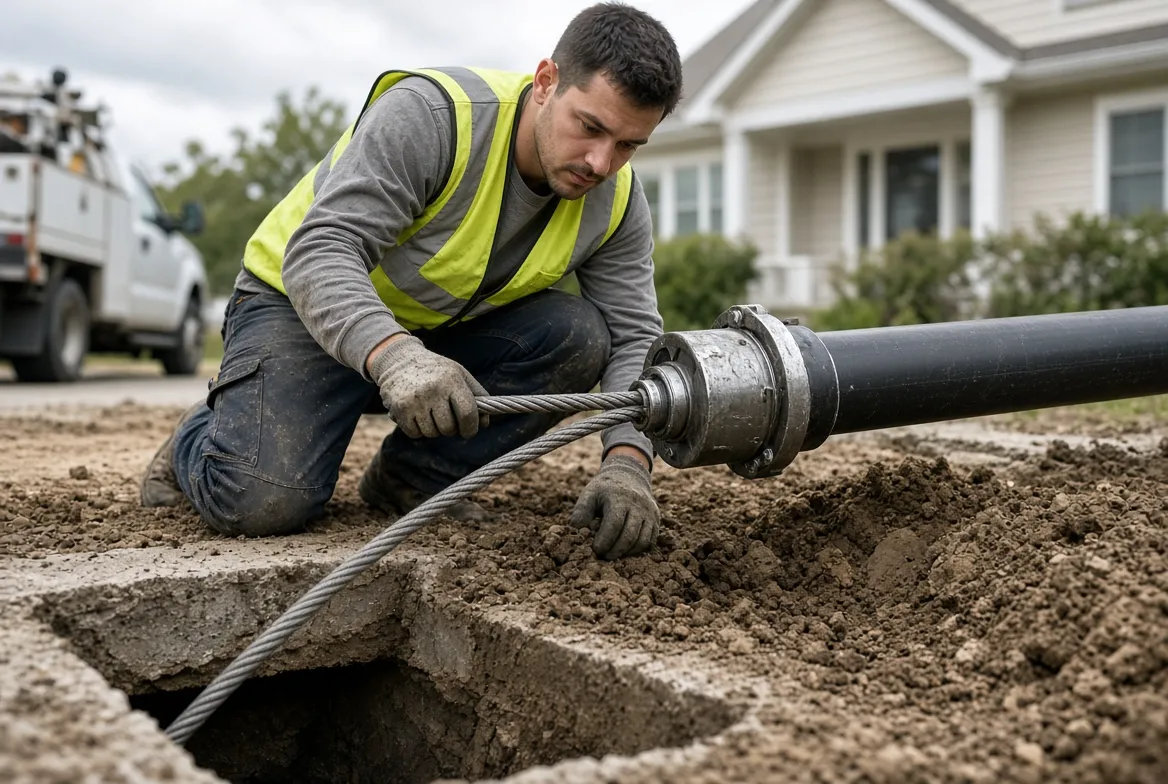
A bursting head splits the old pipe outward while pulling a new HDPE pipe into the same path — total replacement, two small pits.
Steerable boring installs new pipe along a controlled path under driveways, roads, landscaping and waterways.
Horizontal directional drilling installs new underground pipe along a steered path, without opening a trench along the route. A drill rig bores a pilot hole from an entry point, the operator steers it to a planned exit, and the bore is then reamed and the new pipe pulled through.
Where lining and bursting work with an existing pipe, HDD creates a new path entirely. It is the method when there is no old line to follow — new installations, re-routes around obstructions, and crossings under roads, driveways, waterways and anything else that cannot be dug up.
Ohio's glaciated soils are generally workable for directional boring, though conditions vary considerably across the state. Northern and central Ohio glacial till can carry cobbles and boulders that deflect a drill head, and the unglaciated southeast adds shallow bedrock to the picture. We assess ground conditions before quoting rather than discovering them mid-bore.
The common Ohio applications are crossings — under a driveway, a county road, a creek or a protected tree — and new installation where no usable line exists to follow.
HDD is powerful but it is not the answer to everything, and gravity work is where it needs the most care.
Grade control is the real constraint. Pressurised lines — water, gas, conduit — do not care about slope. A gravity sewer does: it has to fall consistently toward the main, and maintaining precise grade over a long bore is demanding. For straightforward residential sewer replacement, pipe bursting follows the existing grade and is usually the better and cheaper choice.
Soil also matters. Cobbles, boulders and fractured rock can deflect the drill head; running sands can collapse a bore. We assess ground conditions before quoting rather than discovering them mid-bore.
For most homeowners replacing a failing sewer lateral, HDD is not the method you need. Bursting or lining will almost always be faster and less expensive. HDD earns its place on new installations, re-routes and crossings — which is why it is more common on commercial sites and multi-utility work.
A pilot bore is drilled from the entry pit along the designed path, with the head's position tracked continuously from the surface and steered as it advances. Drilling fluid — usually a bentonite slurry — cools the head, carries cuttings back and stabilises the bore wall.
Once the head surfaces at the exit, a back reamer is attached and pulled back through, enlarging the bore to the required diameter. The new pipe is attached behind the reamer and drawn into place in the same pass.
For replacing a failing Ohio sewer lateral, pipe bursting is normally faster and cheaper, because it follows the existing grade. Gravity sewers need consistent fall to the main, and holding precise grade over a long steered bore is demanding work.
HDD earns its place on new installs, re-routes and crossings — which is why most of our Ohio drilling work is commercial, municipal and multi-utility rather than residential.
The process
Ground conditions, utility locations and the required grade are established, and the bore path is designed around them.
811 for public utilities plus private locating. On a steered bore this is the difference between a routine job and a serious incident.
The rig is positioned at the entry point and a receiving area prepared at the exit.
The head is steered along the design path, tracked from the surface throughout.
A back reamer enlarges the bore and the new pipe is drawn in behind it.
The new line is tested and tied in. Only the entry and exit areas need restoration.
Answers
HDD is quoted per project rather than from a price list. Bore length, diameter, depth, soil conditions, utility congestion and site access all move the number substantially. We survey before quoting — anyone pricing a bore sight unseen is guessing.
Yes, that is one of its core uses. Bores routinely pass beneath driveways, parking lots, roads, sidewalks and waterways with no surface disturbance between entry and exit. Work in a public right-of-way needs municipal permits and often traffic control, which we handle.
Sometimes, but it is usually not the first choice. Gravity sewers need consistent fall toward the main and holding precise grade over a long bore is demanding. For replacing an existing lateral, pipe bursting follows the original grade and normally costs less. HDD makes sense for new installs and re-routes.
Bursting destroys an existing pipe and pulls a new one along the same path. HDD creates an entirely new path where no usable pipe exists. Bursting needs an old line to follow; drilling does not.
Residential and light commercial work typically runs a few feet to around twenty feet deep. Larger rigs go considerably deeper for utility and municipal crossings. Depth is set by what you need to pass beneath and by the ground conditions.
Keep reading
A bursting head splits the old pipe outward while pulling a new HDPE pipe into the same path — total replacement, two small pits.
Replace a leaking or lead water service without trenching the driveway, walkway and front lawn.
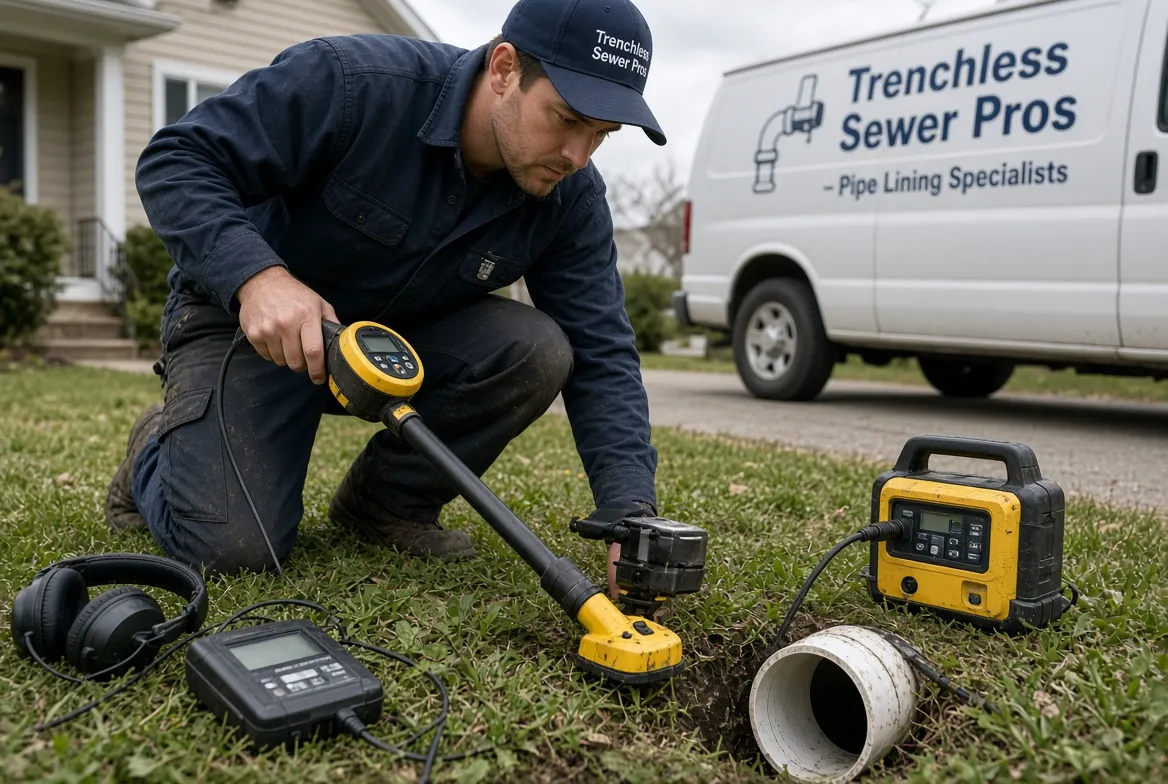
Electronic locating maps the exact route and depth of your line, so excavation is surgical instead of speculative.
Lines back up at the worst possible time. We answer 24/7, anywhere in the country, and every repair quote starts with a camera inspection so you see the pipe before you spend a dollar.