Full replacement
Pipe Bursting
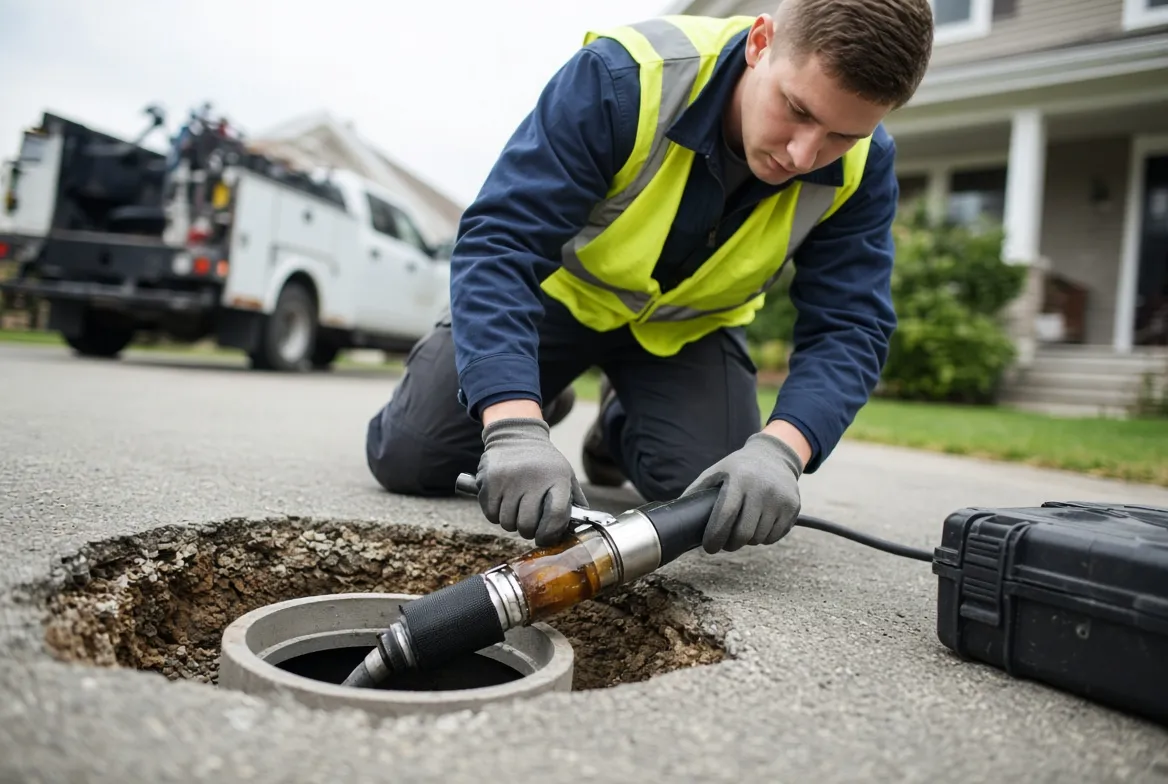
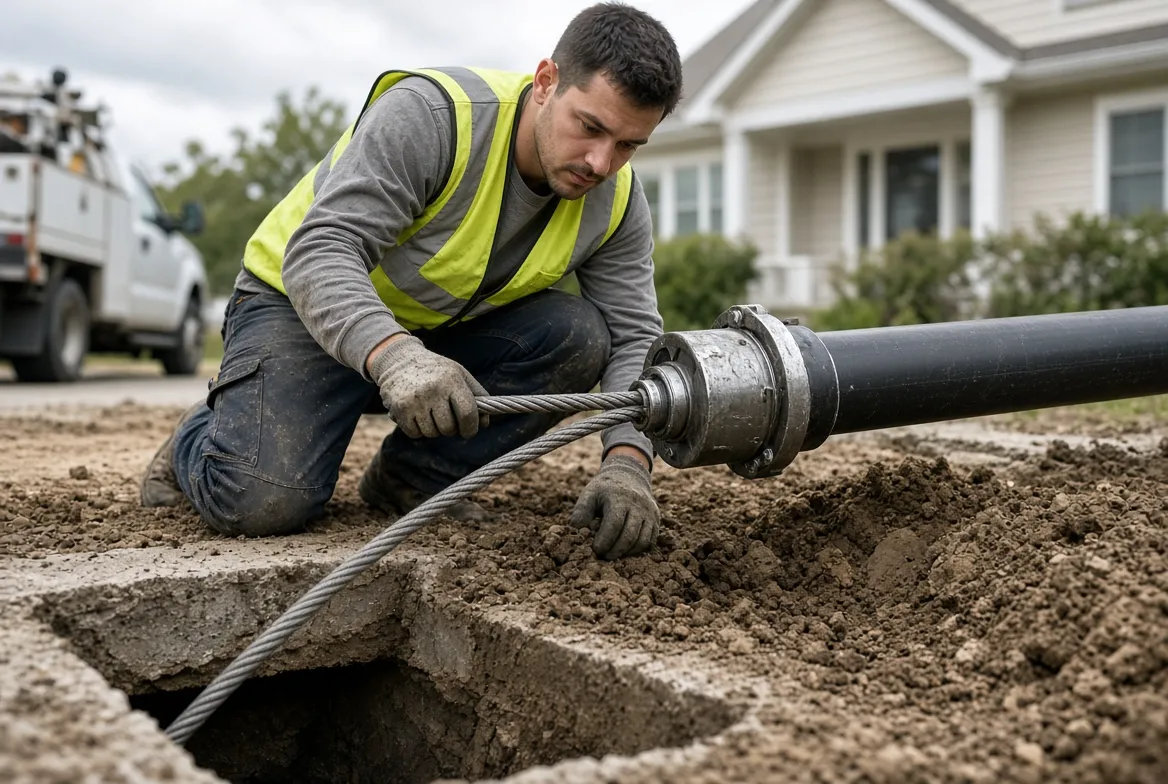
A bursting head splits the old pipe outward while pulling a new HDPE pipe into the same path — total replacement, two small pits.
A resin-saturated liner is installed inside the old pipe and cured hard, forming a new jointless pipe within a pipe.
Cured-in-place pipe lining rebuilds a failing sewer from the inside. A felt or fibreglass liner saturated with thermoset resin is pulled or inverted into the existing pipe, pressed tight against the wall, and cured until it hardens into a continuous new pipe inside the old one.
It has been the dominant sewer rehabilitation method worldwide since the technology was introduced in 1971, for one reason: it replaces the pipe's function without replacing the pipe's location. No trench across the lawn, no demolished driveway, no excavation under the foundation.
CIPP needs a host pipe to line. The liner takes the shape of whatever it is pressed against, which means the existing pipe has to be intact enough to hold that shape while the resin cures.
Lining is the wrong method when the line has fully collapsed, when a section of pipe is simply missing, when the pipe has deformed badly out of round, or when a severe belly means the liner would cure a permanent low spot into place. Thoroughly deteriorated Orangeburg frequently falls into this category — it has lost its shape and there is nothing sound to line.
In those cases the answer is pipe bursting, which replaces the pipe entirely and is also trenchless. Any company that recommends lining without running a camera first is not in a position to know which one you need.
The one question that decides your repair: is the host pipe structurally intact? If yes, line it. If it has collapsed, deformed or gone missing, burst it. Everything else — price, timeline, disruption — follows from that single answer, and only a camera inspection can give it.
Three curing methods are in common use. The right one depends on diameter, length, access and site conditions:
Most residential lining jobs are done through an existing cleanout. Where there is no usable access, we create a single small opening — a fraction of the excavation a dig-and-replace job requires.
That is the whole economic argument for trenchless. Conventional replacement of a lateral running under a mature lawn, a concrete driveway and a front walkway means restoring all three. The restoration frequently costs more than the pipe work. Lining leaves them untouched.
The process
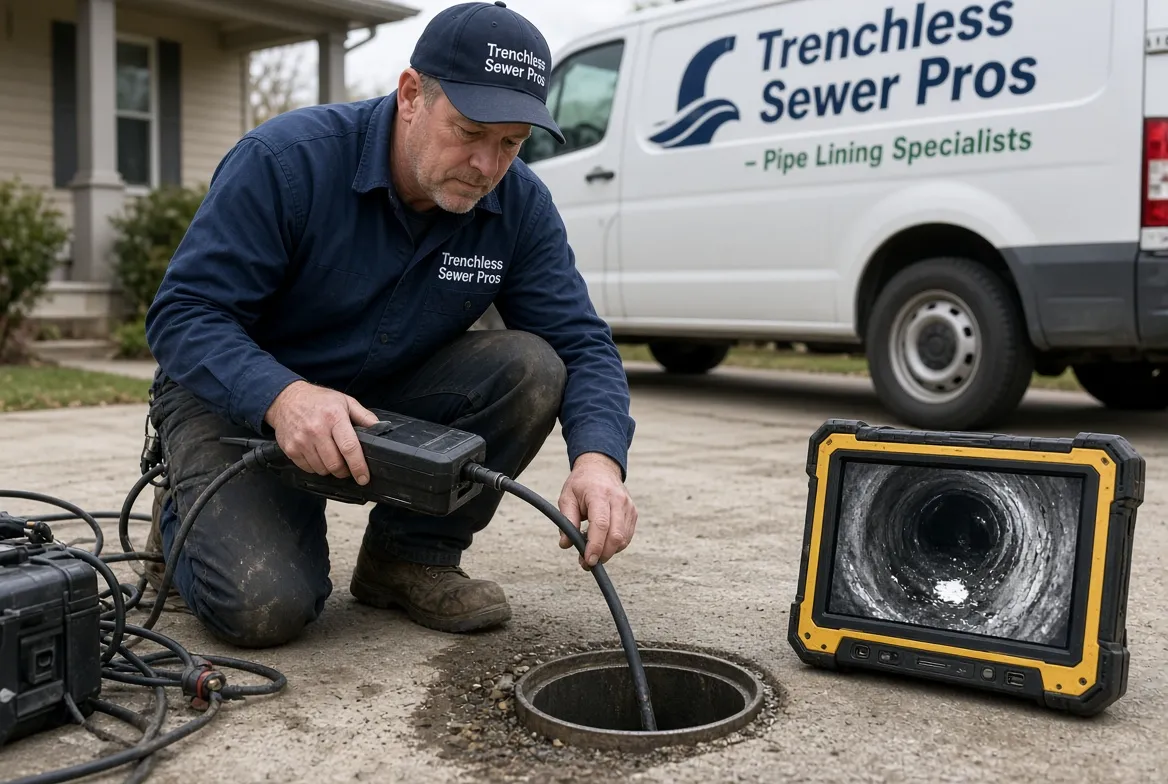
Camera survey establishes pipe material, diameter, length, defect locations and — the deciding factor — whether the host pipe can carry a liner.
Jetting, root cutting and descaling as needed. Resin will not bond to a dirty wall, so this step is not optional.
The liner is cut to length and saturated with a measured resin volume under controlled conditions. Getting this wrong is the most common cause of a failed liner.
The liner is inverted with air or water pressure, or winched into place, then pressed firmly against the host pipe wall.
Ambient, hot water, steam or UV depending on the specification. The liner hardens into a structural pipe.
Any branch connections are reopened robotically, and a final camera pass documents the finished line. You get the footage.
Answers
Residential lateral lining commonly runs $4,000 to $20,000 all in. The variables are length, diameter, how many bends and connections are involved, how much cleaning the pipe needs first, and local permit requirements. It is typically competitive with — and often cheaper than — dig-and-replace once surface restoration is counted.
Most residential laterals are completed in one day. Larger or more complex jobs, and anything needing substantial descaling beforehand, can run two to three days. Service interruption is usually a few hours rather than the full job.
50 years is the standard design benchmark, and municipalities applying CIPP to public sewers commonly cite 50 to 100 years of extended service life. Ask for the manufacturer's specification and the warranty in writing.
Internal diameter is reduced slightly — typically a few millimetres of wall thickness. In practice flow usually improves, because the smooth cured surface has far less friction than the corroded cast iron or root-roughened clay it replaced.
No, and this is the most important thing to be honest about. Lining needs a structurally intact host. Collapsed sections, missing pipe, severe deformation and badly deteriorated Orangeburg cannot be lined — those need pipe bursting. A camera inspection is the only way to tell.
Minimally. Most jobs run through an existing cleanout, and where none exists we open one small access point. Lawns, driveways, mature trees, patios and walkways stay intact — which is the entire reason the method exists.
Keep reading
A bursting head splits the old pipe outward while pulling a new HDPE pipe into the same path — total replacement, two small pits.
One bad joint doesn't justify a whole new line. A sectional liner repairs just the damaged length.
A self-levelling camera runs the full line and shows you exactly what is wrong before anyone quotes a repair.
Lines back up at the worst possible time. We answer 24/7, anywhere in the country, and every repair quote starts with a camera inspection so you see the pipe before you spend a dollar.