Start here
Sewer Camera Inspection
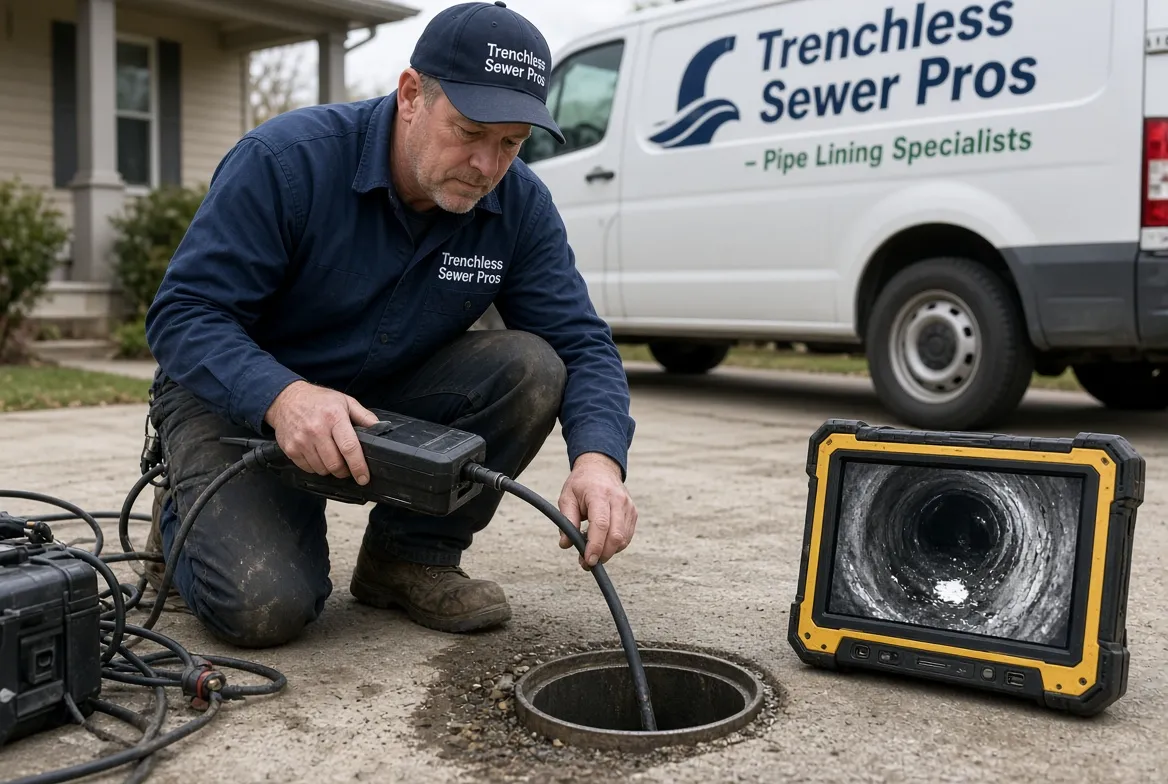
A self-levelling camera runs the full line and shows you exactly what is wrong before anyone quotes a repair.
Electronic locating maps the exact route and depth of your line, so excavation is surgical instead of speculative.
Nobody has the drawings. Original plans are lost, utilities get re-routed, and additions get built straight over the lateral. Locating replaces assumptions with a marked line on the ground and a depth in inches.
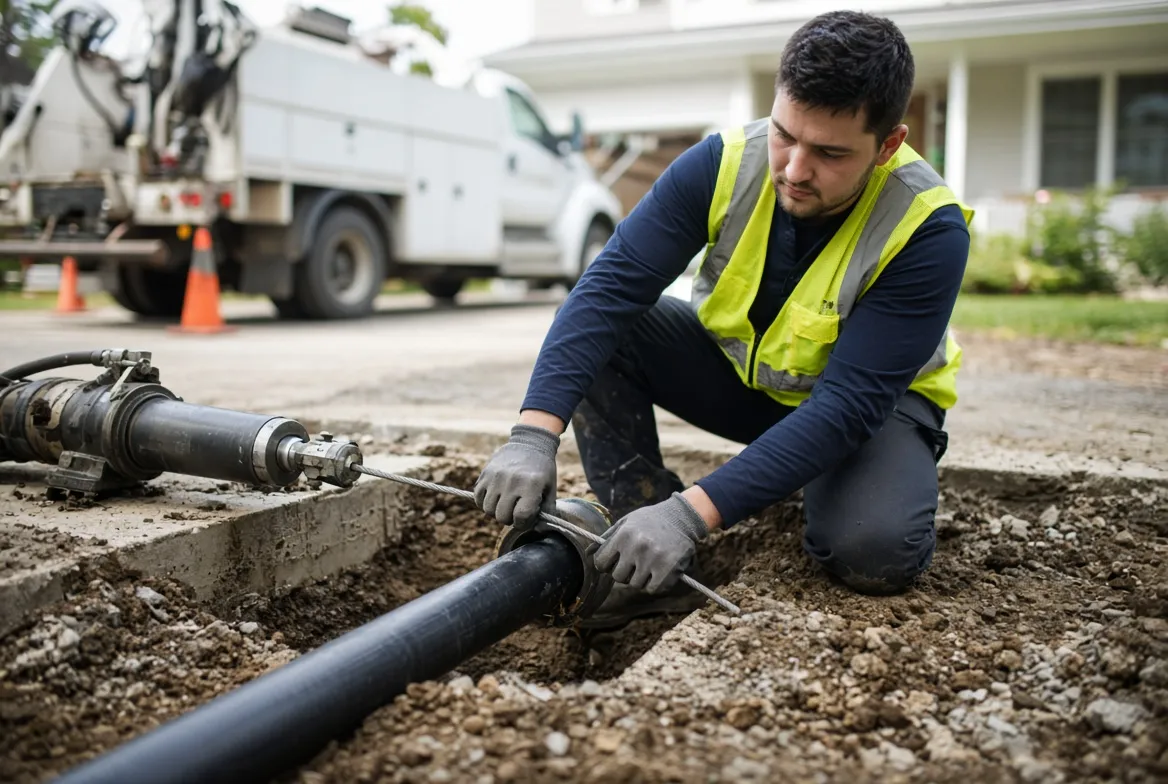
We trace the route electronically, mark it on the surface, and record the depth at intervals along the run. That is what makes trenchless work possible — every method on this site depends on knowing precisely where the pipe is and what else is buried near it.
Ohio's older neighbourhoods were built before anyone kept reliable as-builts, and laterals have since been re-routed around additions, garages and driveways that came later. On a pre-war property the documented route and the actual route are frequently different things.
Clay tile and Orangeburg are non-metallic, so neither can be traced with a conductive signal. We locate them with a sonde run through the line — which means the camera and the locate are generally done in the same visit.
A camera inspection tells you what is wrong inside the pipe. Locating tells you where that pipe physically is. They are usually done in the same visit, but they answer different questions and either one can be the one you actually need.
If you are planning a deck, a pool, a garage slab, a tree or a fence, you need locating and not inspection. If you have a backup, you need inspection first.
811 is free, legal and not optional. In the United States, calling 811 a few business days before any excavation gets public utilities — gas, electric, water, telecom — marked at no charge. Hitting a gas line is a life-safety event, not an inconvenience.
What 811 does not mark is private lines on your side of the meter: your sewer lateral, your water service, irrigation, septic, invisible fencing, landscape lighting. That is the gap this service fills. Use both — 811 for public utilities, private locating for everything on your property.
Ohio law requires contacting OHIO811 before excavation. It is free, and it gets public utilities marked — gas, electric, water, telecom.
What it does not mark is anything privately owned on your side of the meter: your sewer lateral, water service, irrigation, septic or landscape lighting. That is the gap private locating fills. Use both.
The process
We confirm what you need found, identify cleanouts and the likely connection point to the main.
A sonde is run into the line, or a signal is applied directly to metallic pipe.
The route is walked with a receiver and marked on the surface in paint or flags.
Depth readings are taken at intervals, so you know what you are dealing with before anyone breaks ground.
You get a sketch or marked photos of the route, which is worth keeping for the next contractor who works on the property.
Answers
Yes — that is the whole point. Electronic locating works entirely from the surface. We only break ground once the route and depth are known, and with trenchless methods that is usually one or two small access points rather than a trench.
Horizontal position is typically accurate to within a few inches. Depth is generally within about 10 percent of actual, and gets less precise as the line gets deeper or when other buried metal interferes with the signal.
Yes, always, and it is free. 811 marks public utilities. It does not mark private lines on your property — your sewer lateral, water service, irrigation or septic. Those need private locating. Do both.
Yes. Pressurised water lines are found acoustically, by listening for the sound of escaping water. If the line turns out to need replacing, trenchless water line replacement avoids trenching the yard and driveway.
Keep reading
A self-levelling camera runs the full line and shows you exactly what is wrong before anyone quotes a repair.
Replace a leaking or lead water service without trenching the driveway, walkway and front lawn.
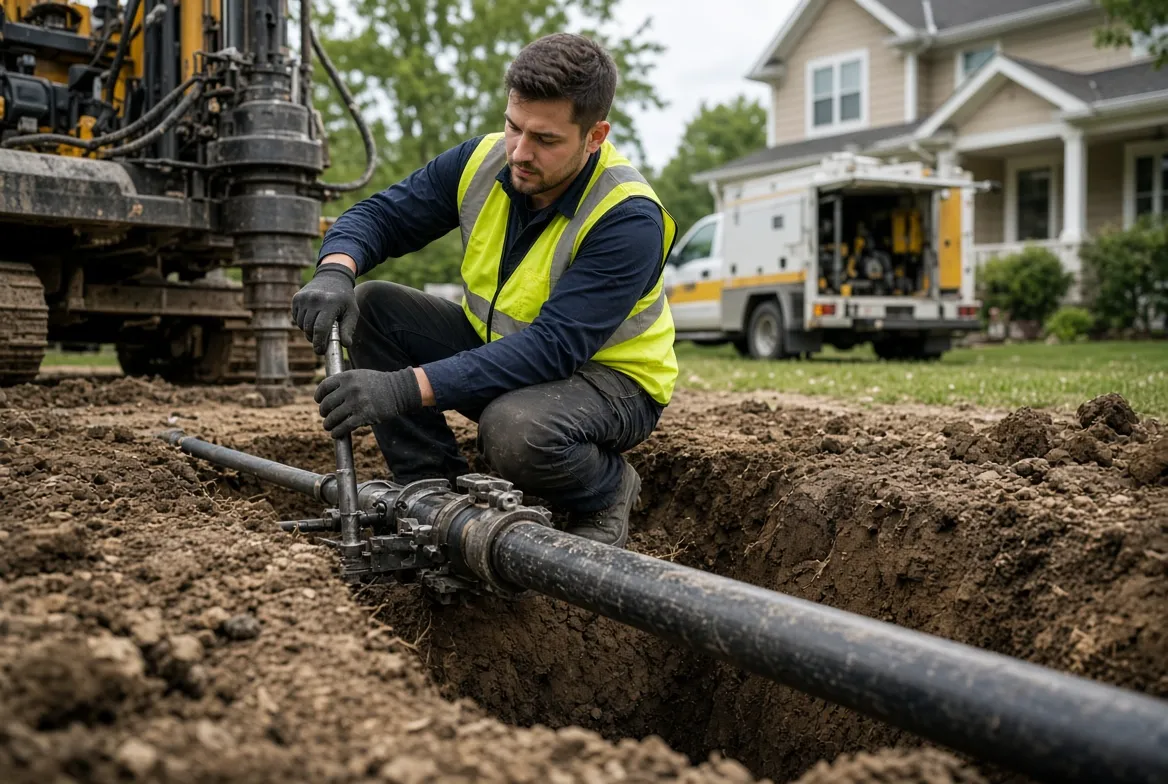
Steerable boring installs new pipe along a controlled path under driveways, roads, landscaping and waterways.
Lines back up at the worst possible time. We answer 24/7, anywhere in the country, and every repair quote starts with a camera inspection so you see the pipe before you spend a dollar.