Most common
Hydro Jetting
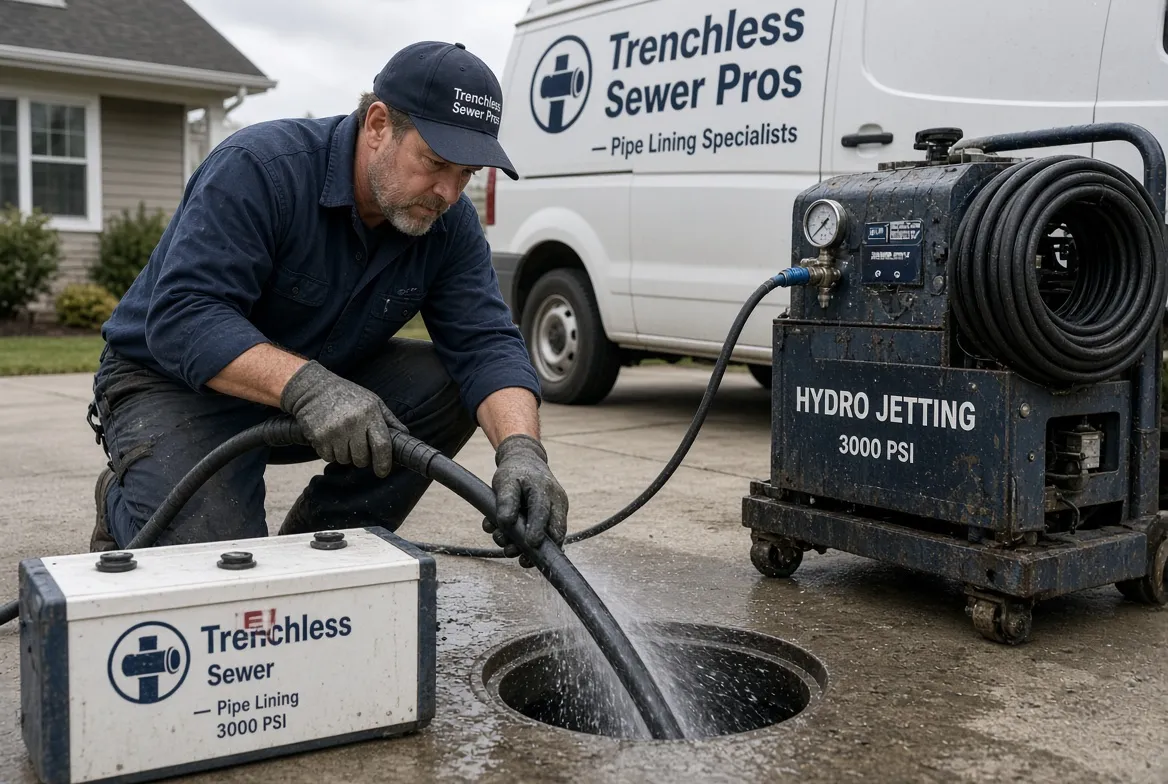
High-pressure water scours the pipe wall back to bare material — grease, sludge, scale and roots all go.
Mechanical cutting heads strip corrosion and tuberculation out of cast iron, restoring the pipe's real diameter.
Cast iron corrodes from the inside out. Over decades the wall builds up a hard, layered crust of rust and mineral deposit called tuberculation, which narrows the bore, snags debris and eventually chokes the line.
Descaling removes that buildup mechanically — chain knockers, rotating cutter heads and milling tools driven down the line to cut the scale off the wall and restore the pipe's actual internal diameter. Water alone will not do it.
Cast iron drain line is concentrated in Ohio's urban cores and inner-ring suburbs — Cleveland, Cincinnati, Toledo, Akron, Dayton and Youngstown all have substantial inventories from the 1900–1975 period.
Given typical service life, much of it is now in the window where tuberculation has meaningfully narrowed the bore. The symptom pattern is distinctive: backups that become gradually more frequent over years rather than appearing suddenly, often with rust-coloured water at the floor drain.
People use the terms interchangeably and they are not the same thing. Hydro jetting uses water pressure and excels at grease, sludge and soft blockages. Hardened tuberculation in cast iron shrugs water off.
Descaling is mechanical. Chain flails or carbide cutters spin against the pipe wall and physically shear the scale away. On a badly scaled cast iron line, descaling is the only thing that restores diameter — and the two are often run in sequence, descaling to cut the crust and jetting to flush the debris out.
Cast iron was the dominant residential drain material in the United States for most of the twentieth century, used heavily from the early 1900s through the 1970s before PVC and ABS took over.
Under good conditions cast iron can last a century. In practice many lines need attention at 25 to 50 years, and the failure is gradual: scale builds, diameter shrinks, backups become more frequent, and eventually the wall itself perforates. If your home dates from before about 1975 and you have never had the line scoped, you do not know which stage you are at.
Descaling restores a pipe that still has structural integrity. It cannot restore one that does not.
On Ohio cast iron the two services are usually sequential rather than alternatives. Descaling restores the diameter; lining then gives the pipe a smooth, corrosion-proof interior that will not scale again.
Descaling alone restores flow but does not stop corrosion — iron that has scaled once will scale again. If you want this solved rather than deferred, plan for both.
The process
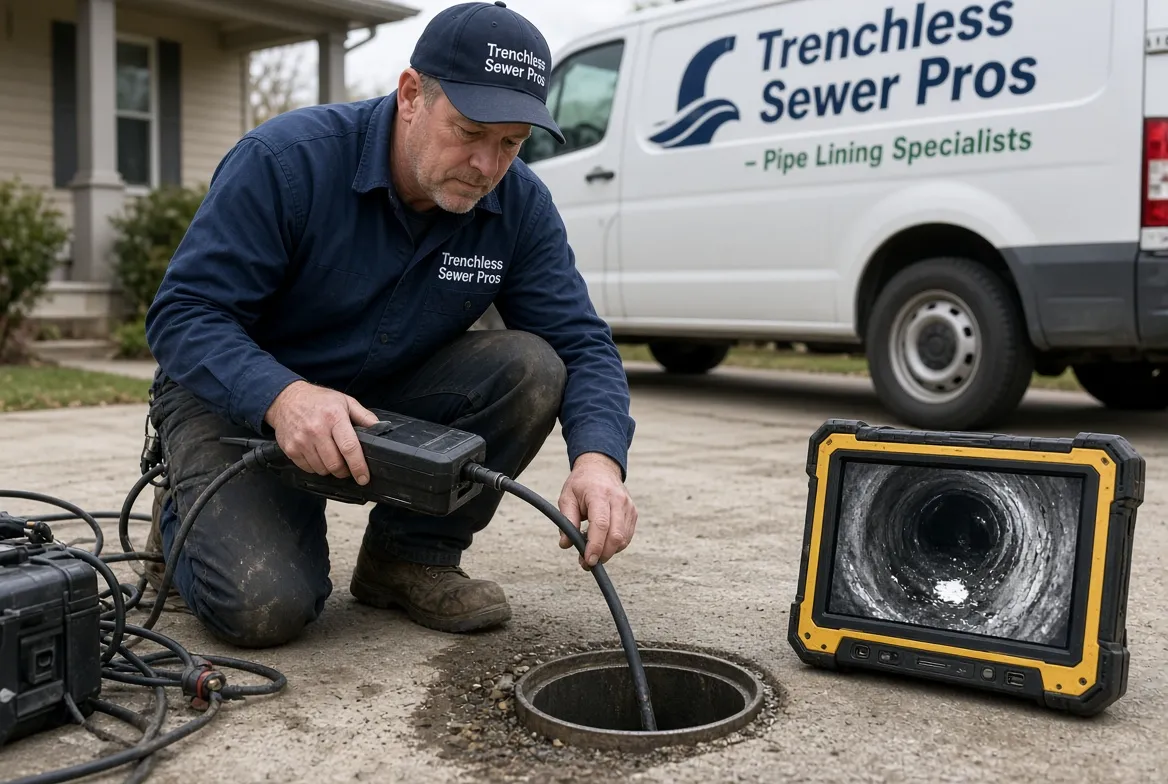
We measure how much scale is present and — critically — how much sound wall is left underneath it.
Chain knockers for heavy tuberculation, rotating cutters for moderate scale, milling heads for hardened deposits. Head size is matched to pipe diameter.
The head is driven down the line, cutting buildup away from the wall in controlled passes rather than one aggressive run.
Jetting carries the cut material out of the line. Loose scale left behind simply forms the next blockage.
Final footage shows restored diameter and reveals any defects the scale was concealing — which is often how a lining job gets identified.
Answers
Roughly $600 to $4,000, with most residential jobs landing nearer the middle. Cost tracks line length, how severe the buildup is, how many access points are needed, and whether jetting and a follow-up camera pass are included. Get the scope in writing.
Done properly, no — the cutting heads are sized to the pipe and remove scale, not wall. The risk is in pipe that has already corroded through and has very little sound wall left. That is precisely what the pre-inspection determines, and it is why we will sometimes tell you descaling is the wrong call.
Descaling restores flow; it does not stop corrosion. Cast iron that has already scaled once will scale again. If you want a long-term fix, descaling followed by CIPP lining gives you a new, smooth, corrosion-proof interior with a typical design life of 50 years or more.
Usually yes. We normally open a channel first — by cable or jetting — then descale the full circumference. A line so packed that nothing passes may need an access point opened, and if the camera then shows collapse, descaling is off the table.
Keep reading
High-pressure water scours the pipe wall back to bare material — grease, sludge, scale and roots all go.
A resin-saturated liner is installed inside the old pipe and cured hard, forming a new jointless pipe within a pipe.
A self-levelling camera runs the full line and shows you exactly what is wrong before anyone quotes a repair.
Lines back up at the worst possible time. We answer 24/7, anywhere in the country, and every repair quote starts with a camera inspection so you see the pipe before you spend a dollar.